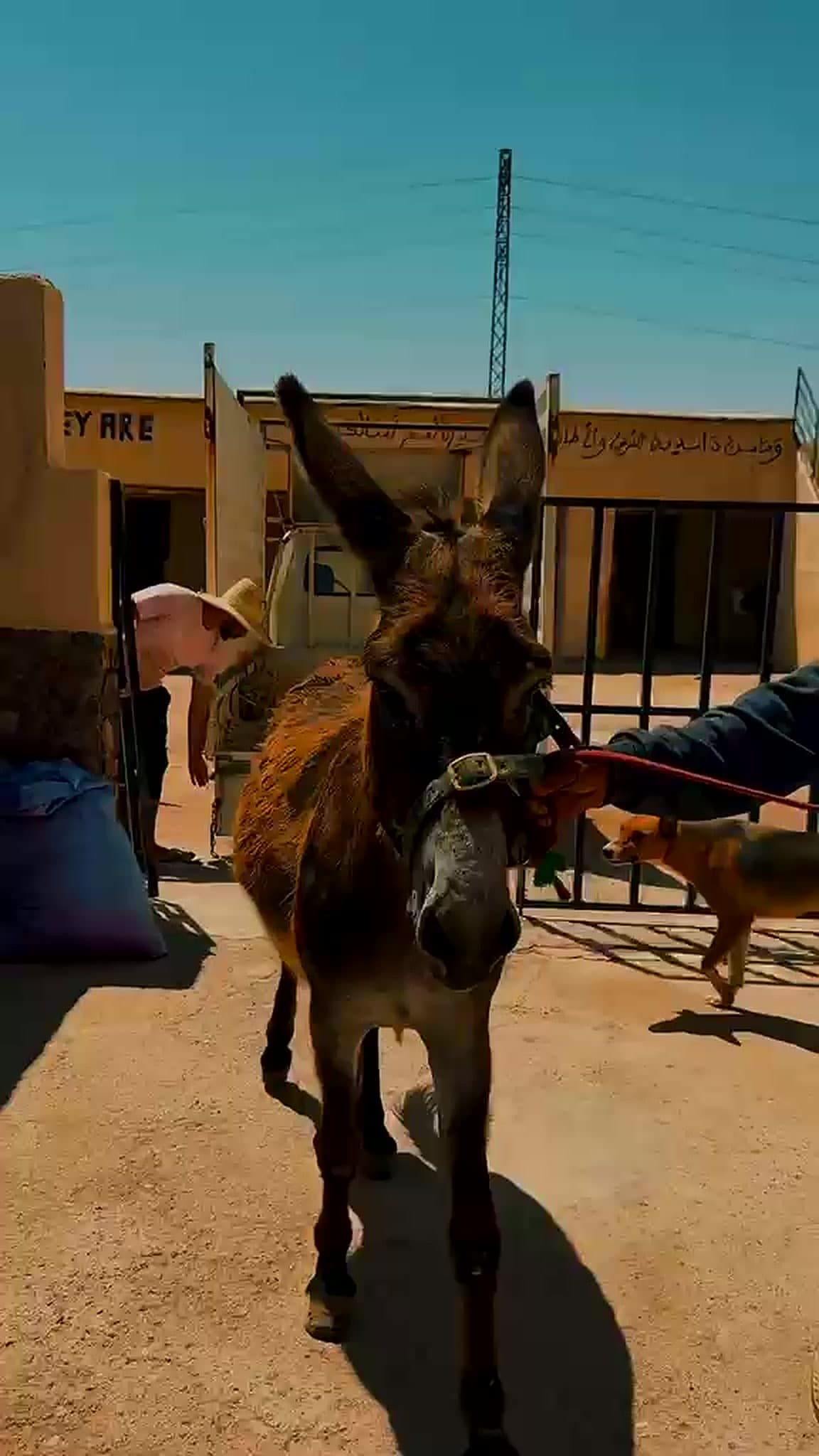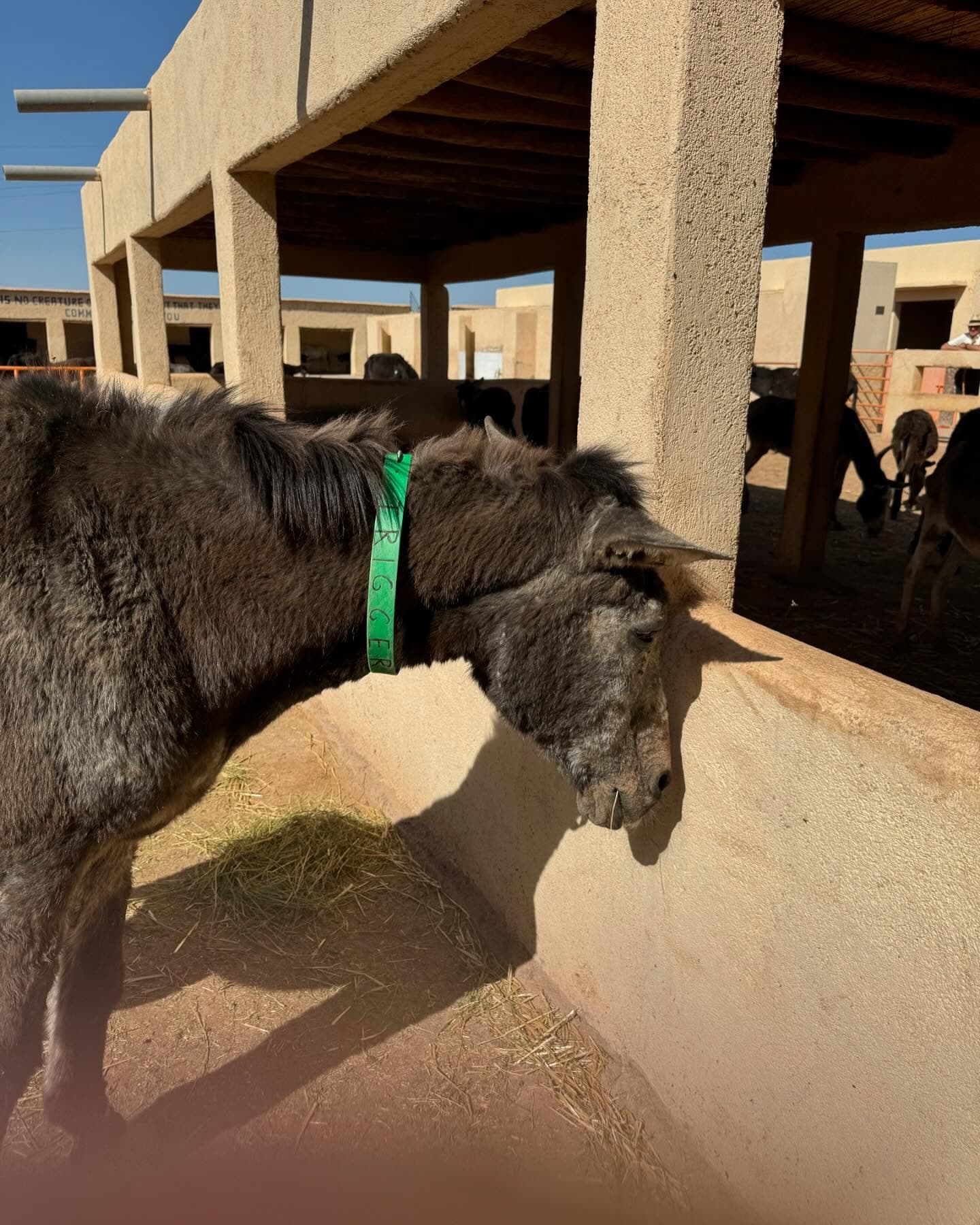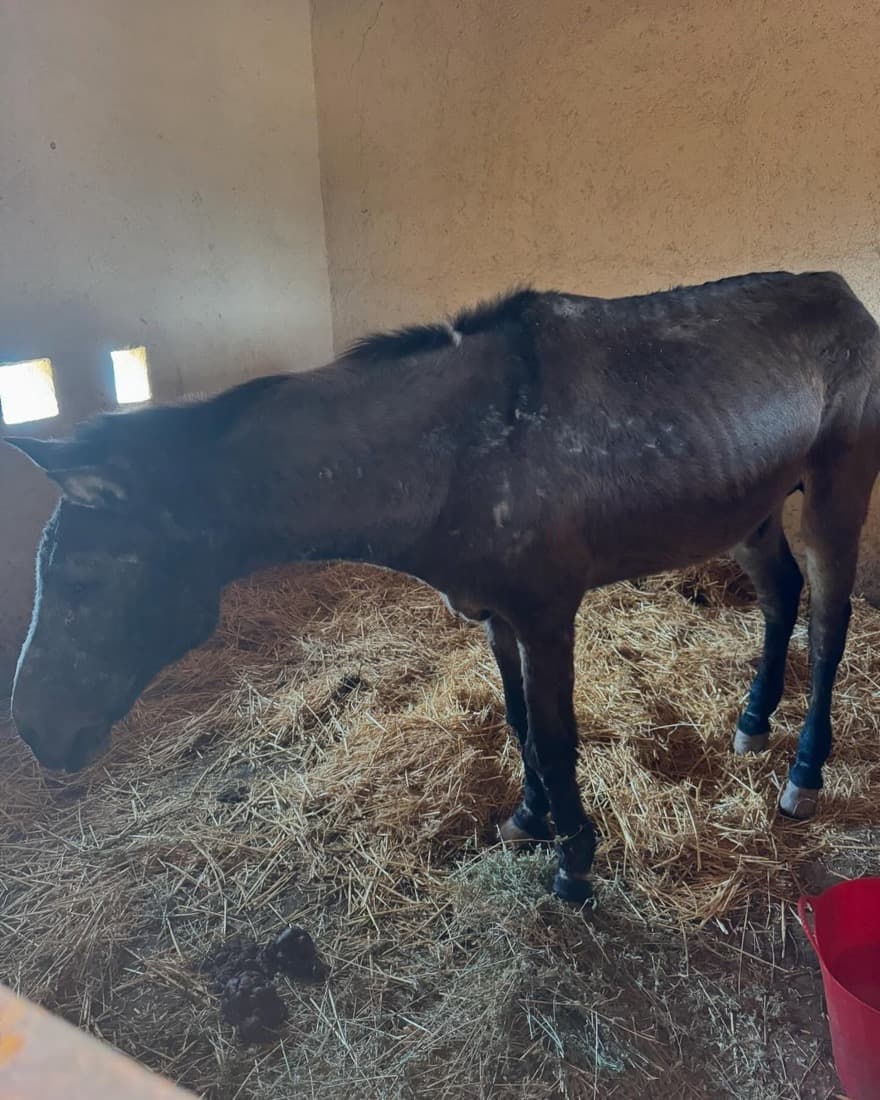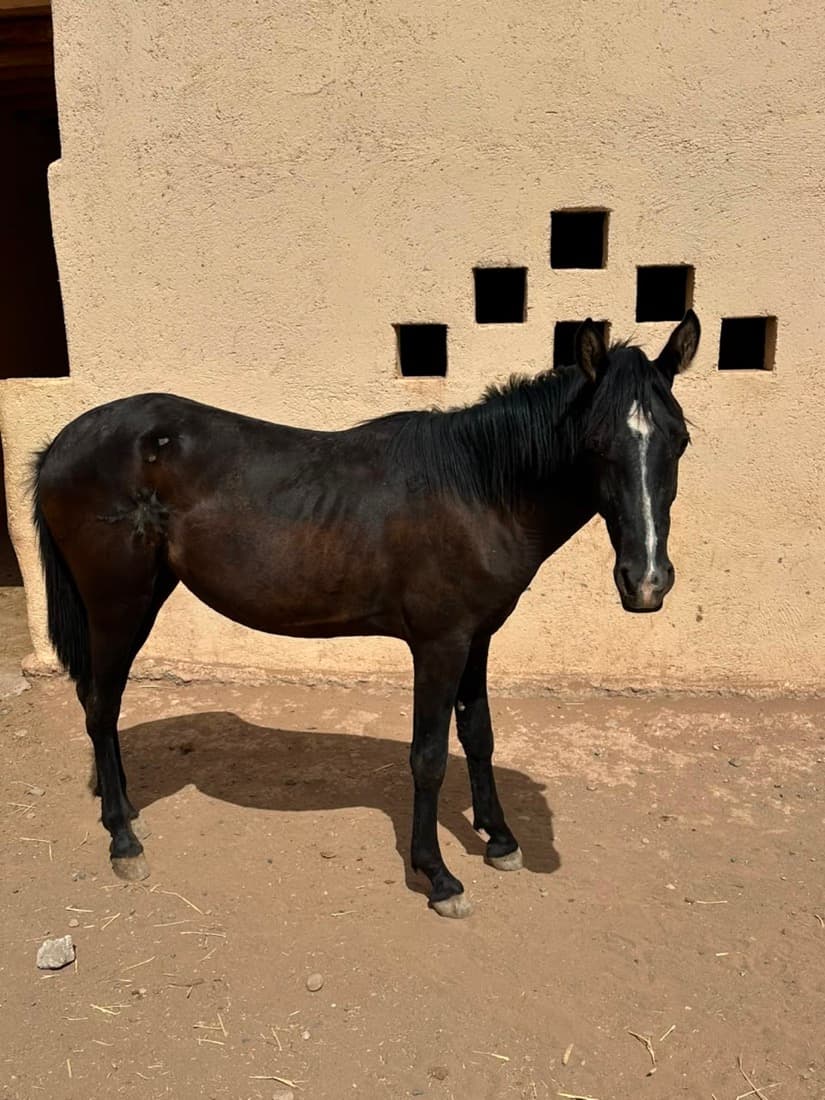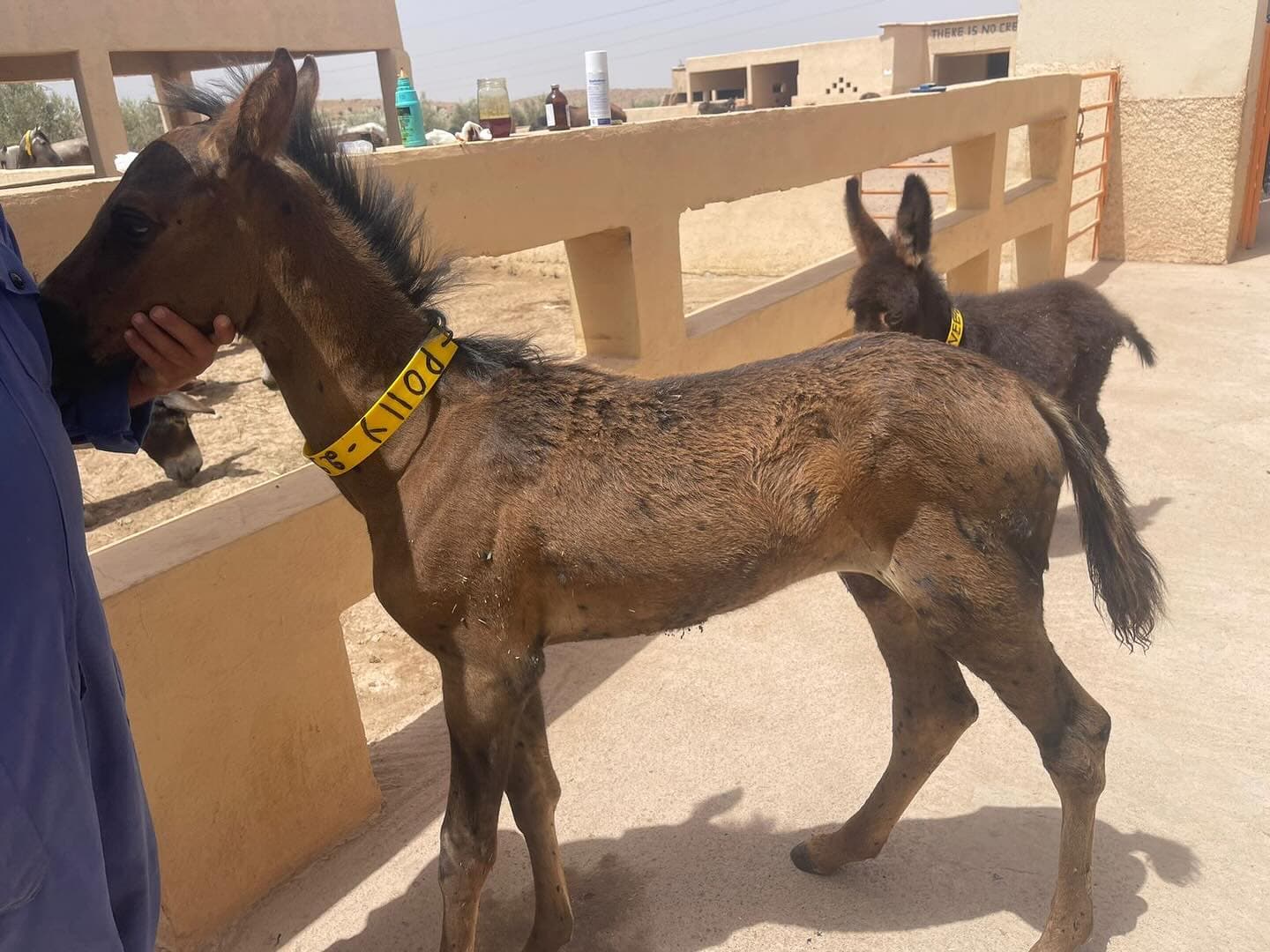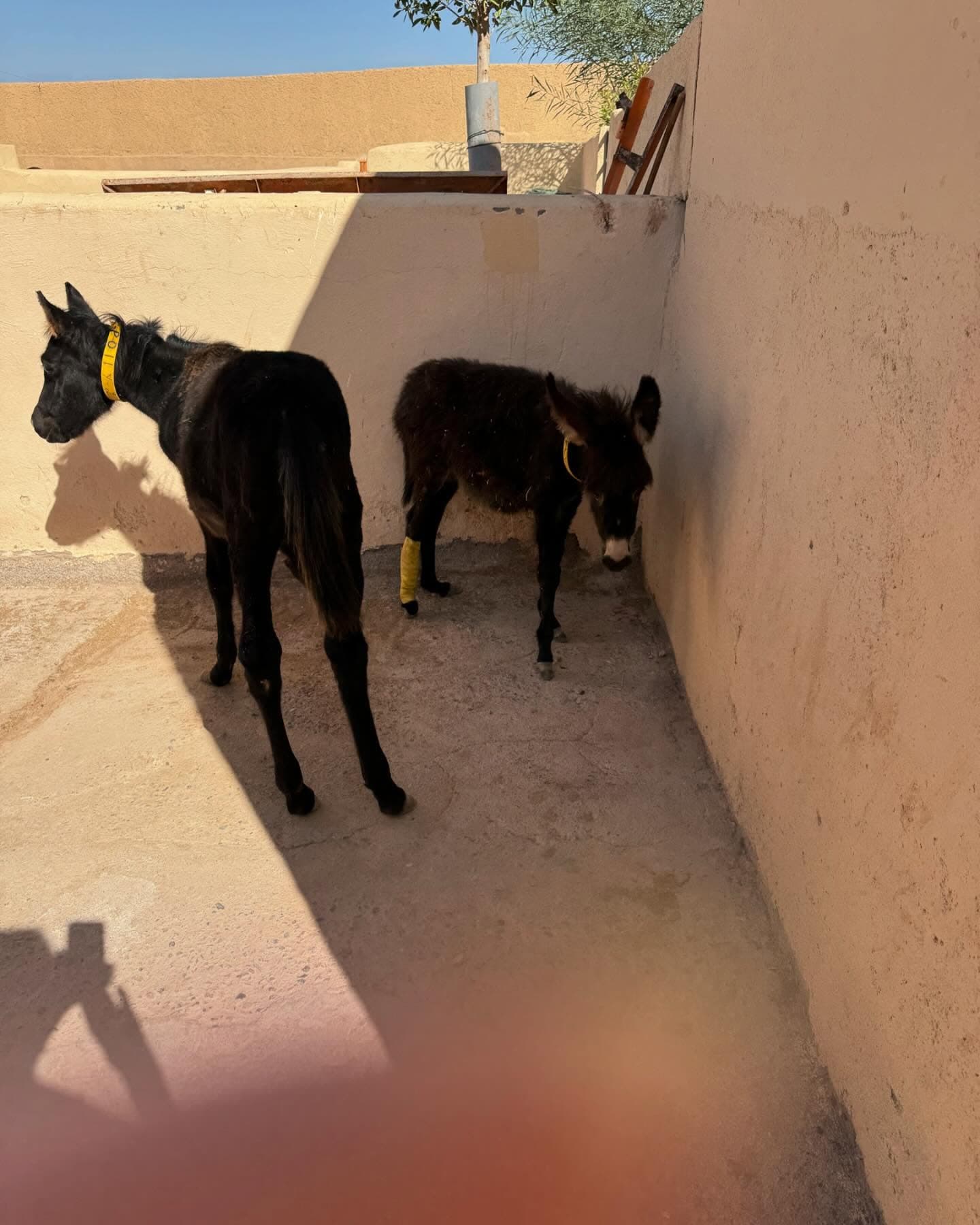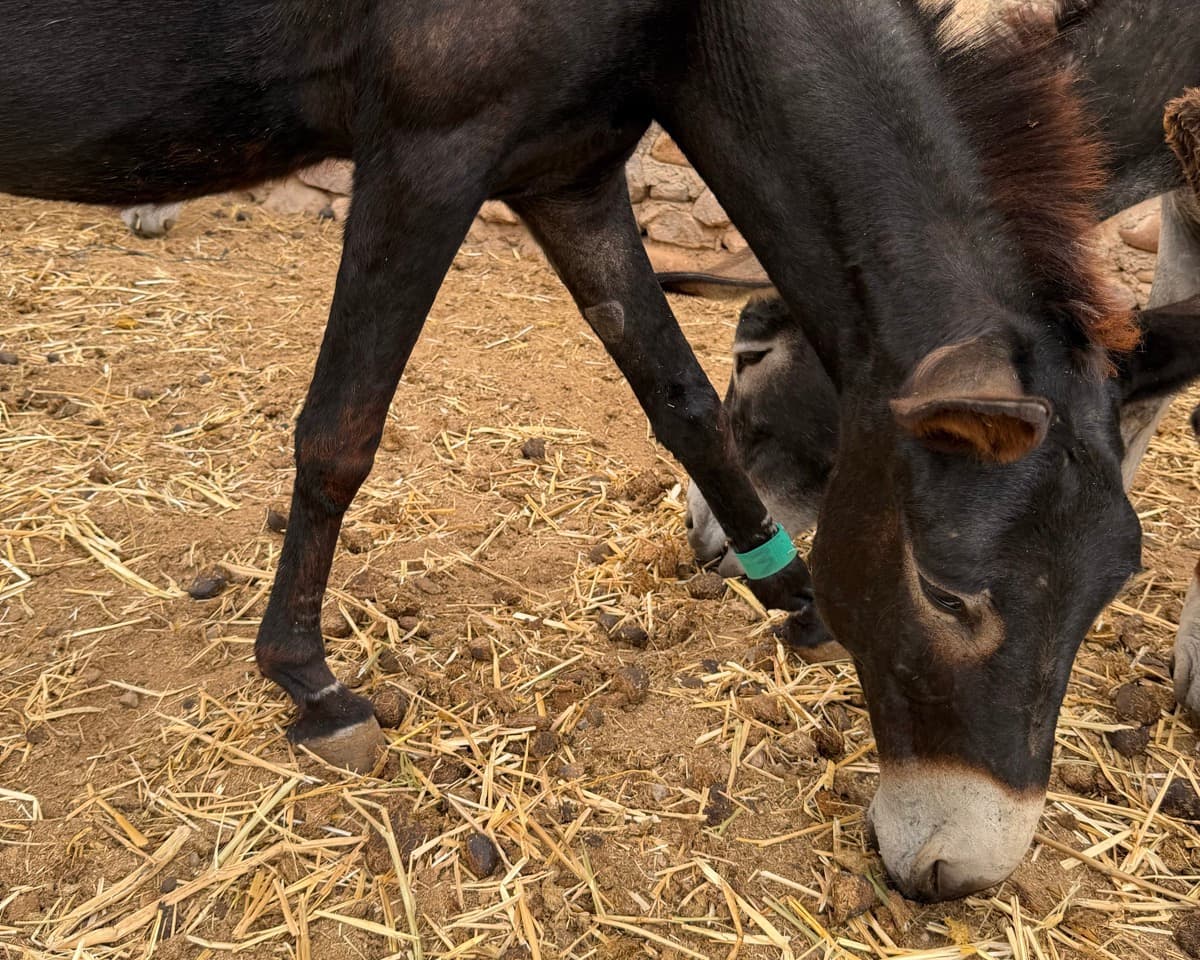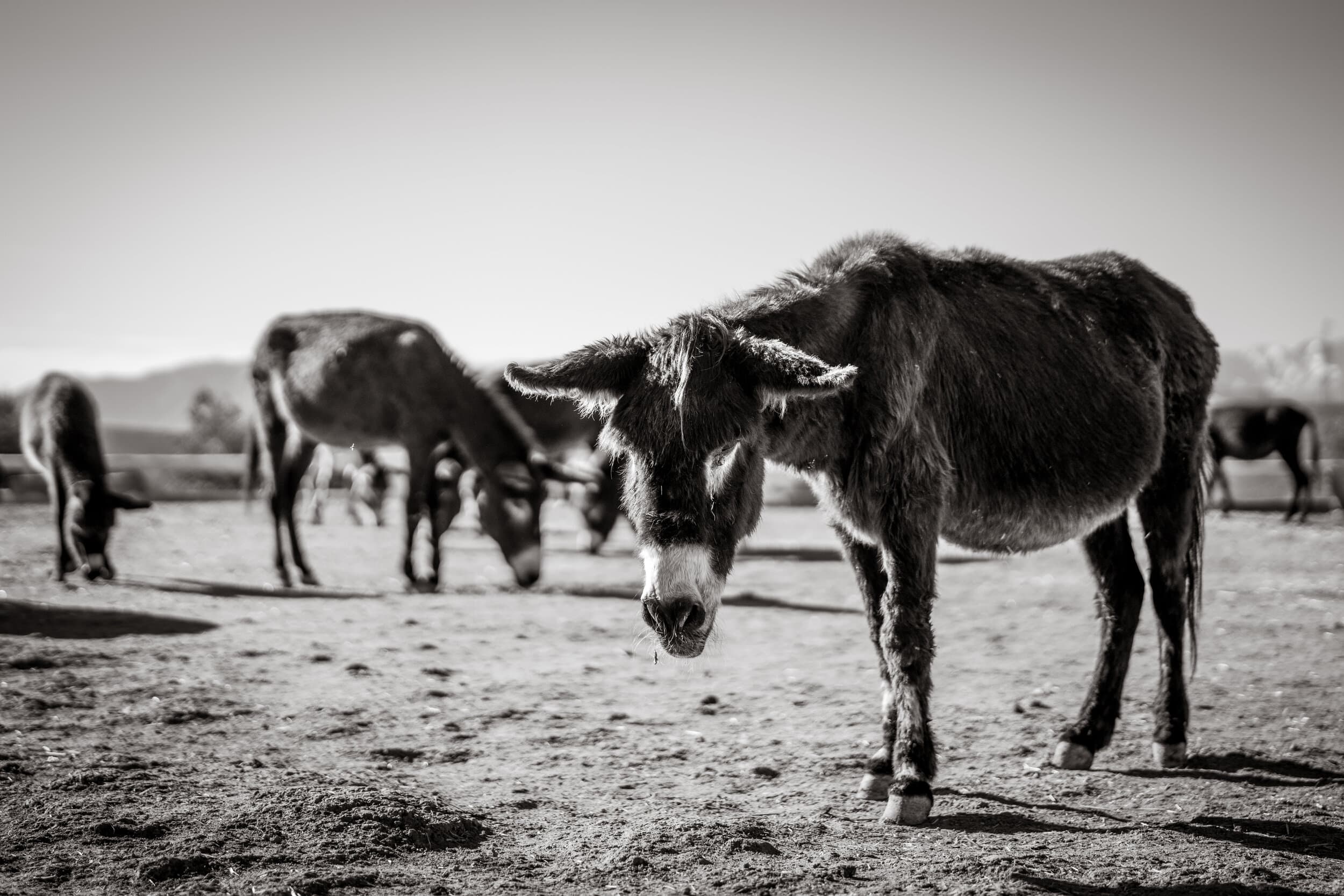
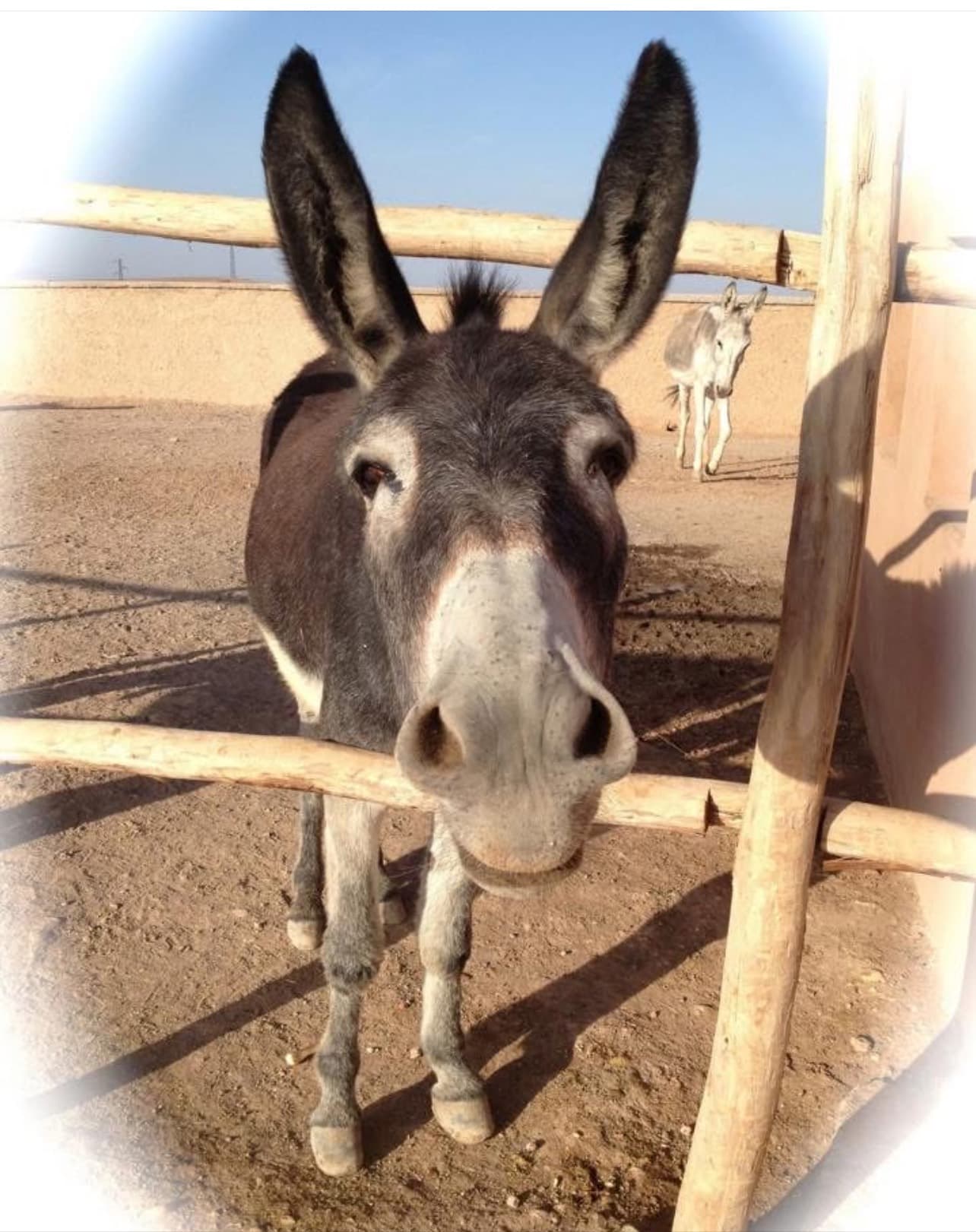
A herd of donkeys grazing together at Jarjeer

Our Residents

Meet the herd

Every animal here arrived with a history behind them. These are a few of them — who they were when they came to us, and who they are now.

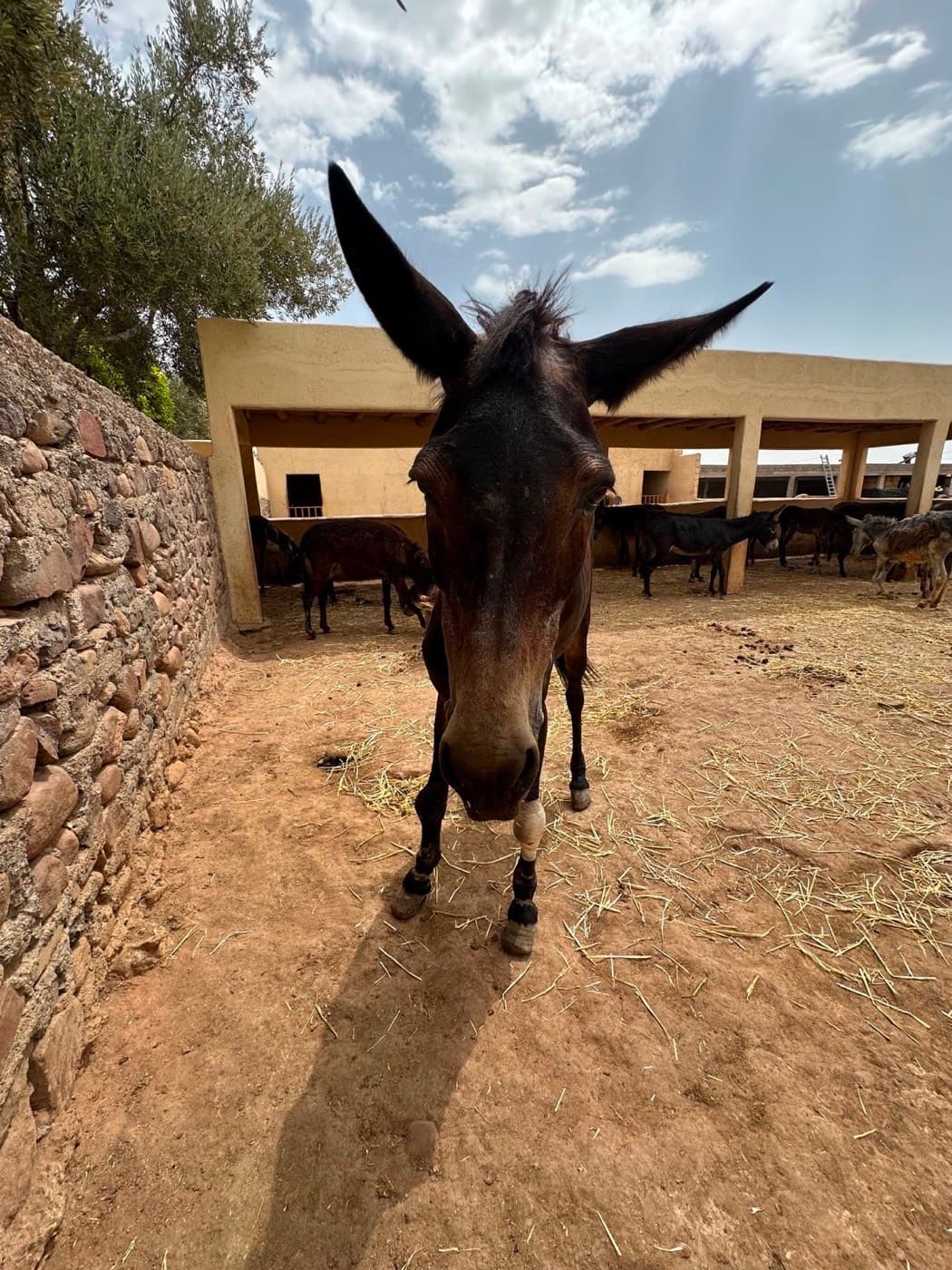
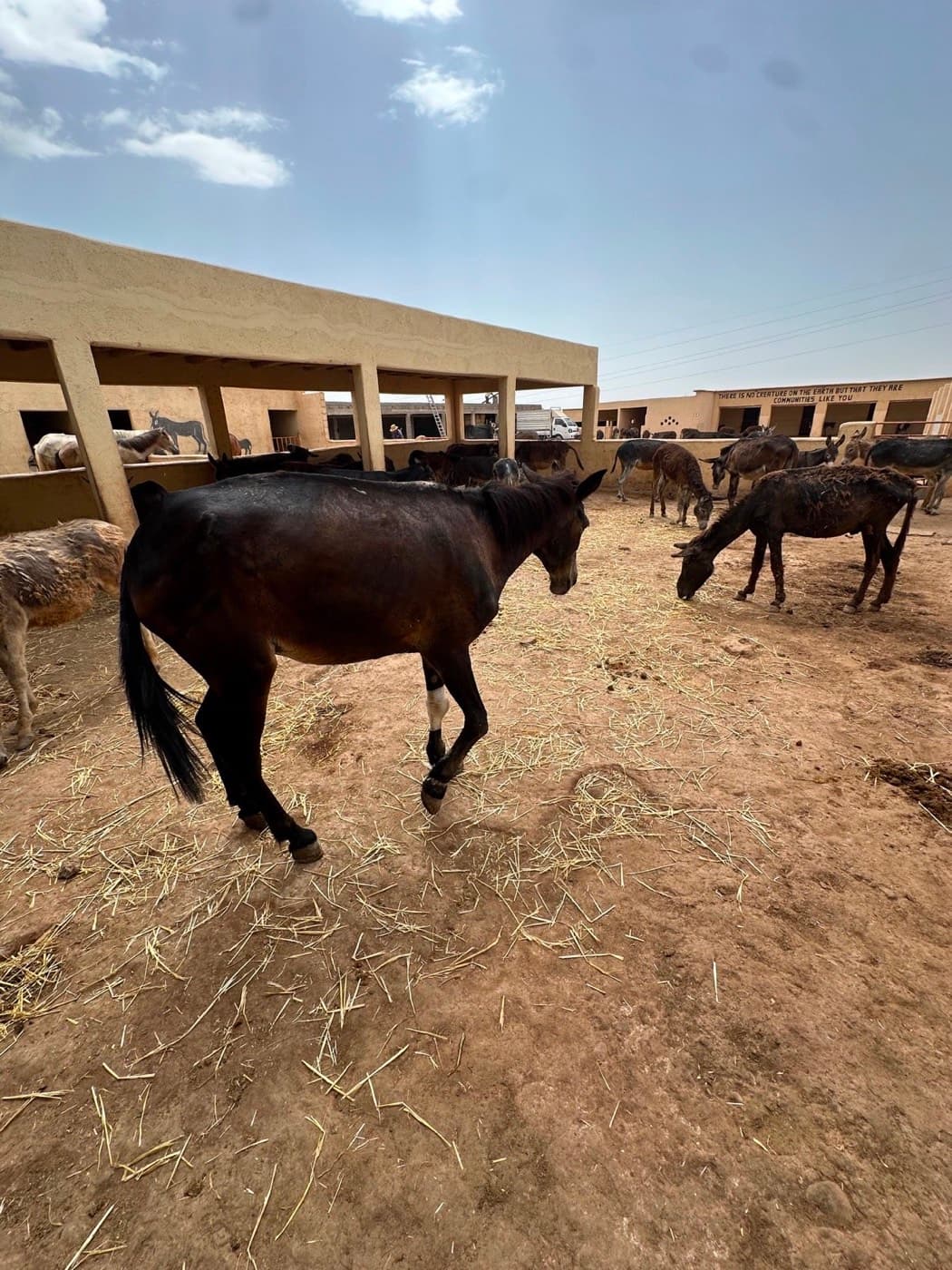
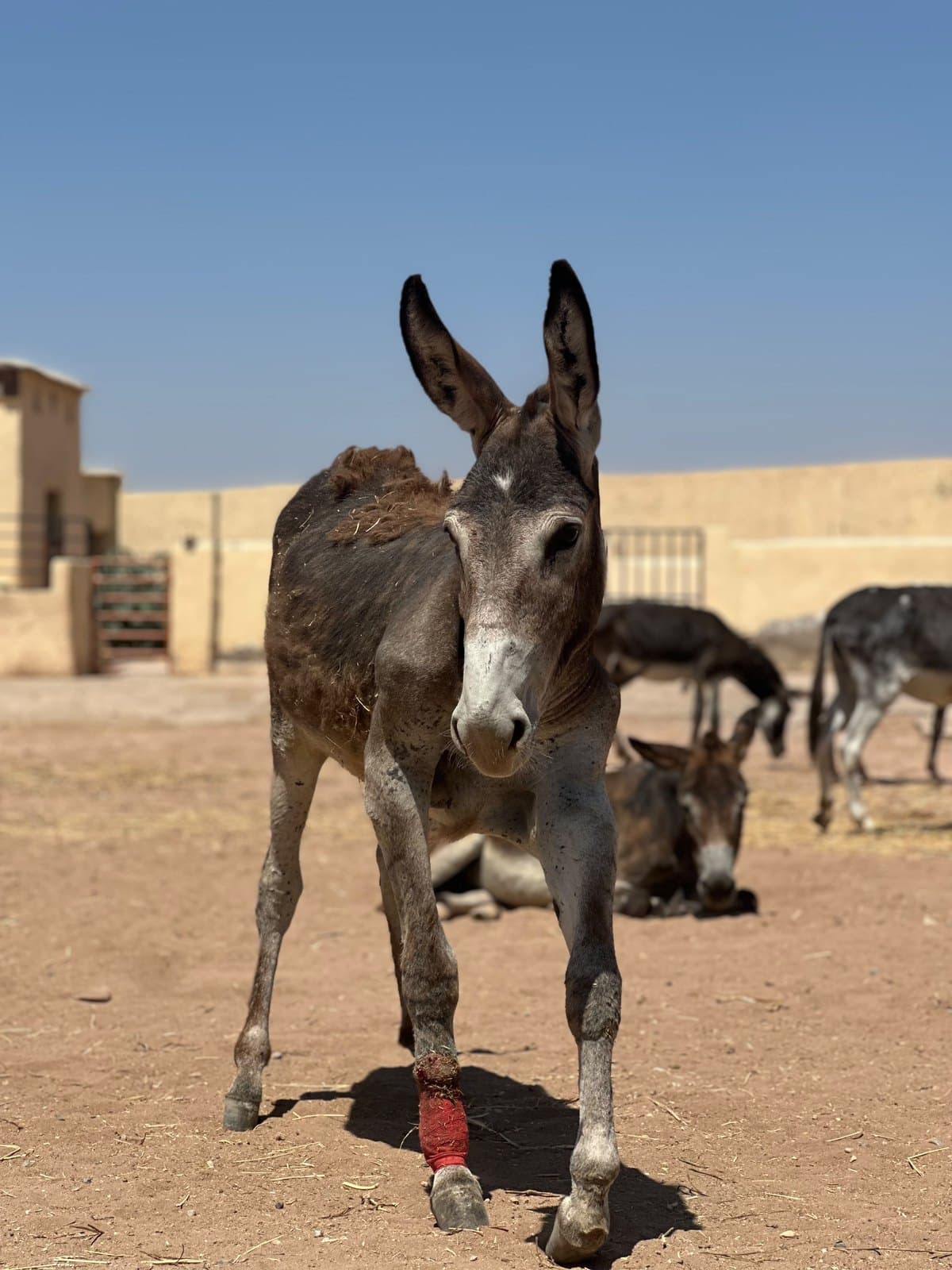
Lucky, a dark bay mule with a bandaged knee, standing in the hospital paddock at Jarjeer with her ears up and other animals behind herMule

Lucky

Arrived 28 July 2026 · Rescued from Marrakech

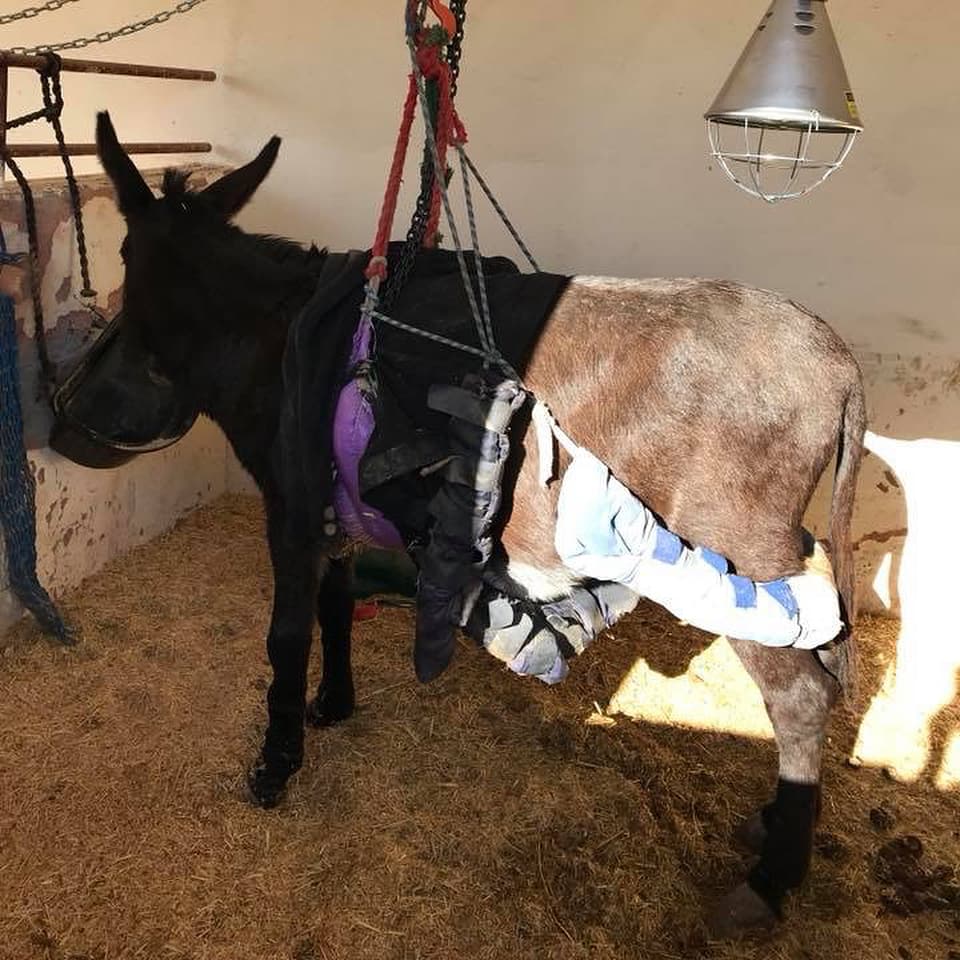
Lucky went down in a Marrakech street, still harnessed to the cart she was pulling, after a car door swung open onto it and took her legs from under her. Somebody watching wrote to us. Nobody had thought to unhitch the cart before hauling at her, and a crowd had gathered to force water down her throat — people meaning well, doing harm.

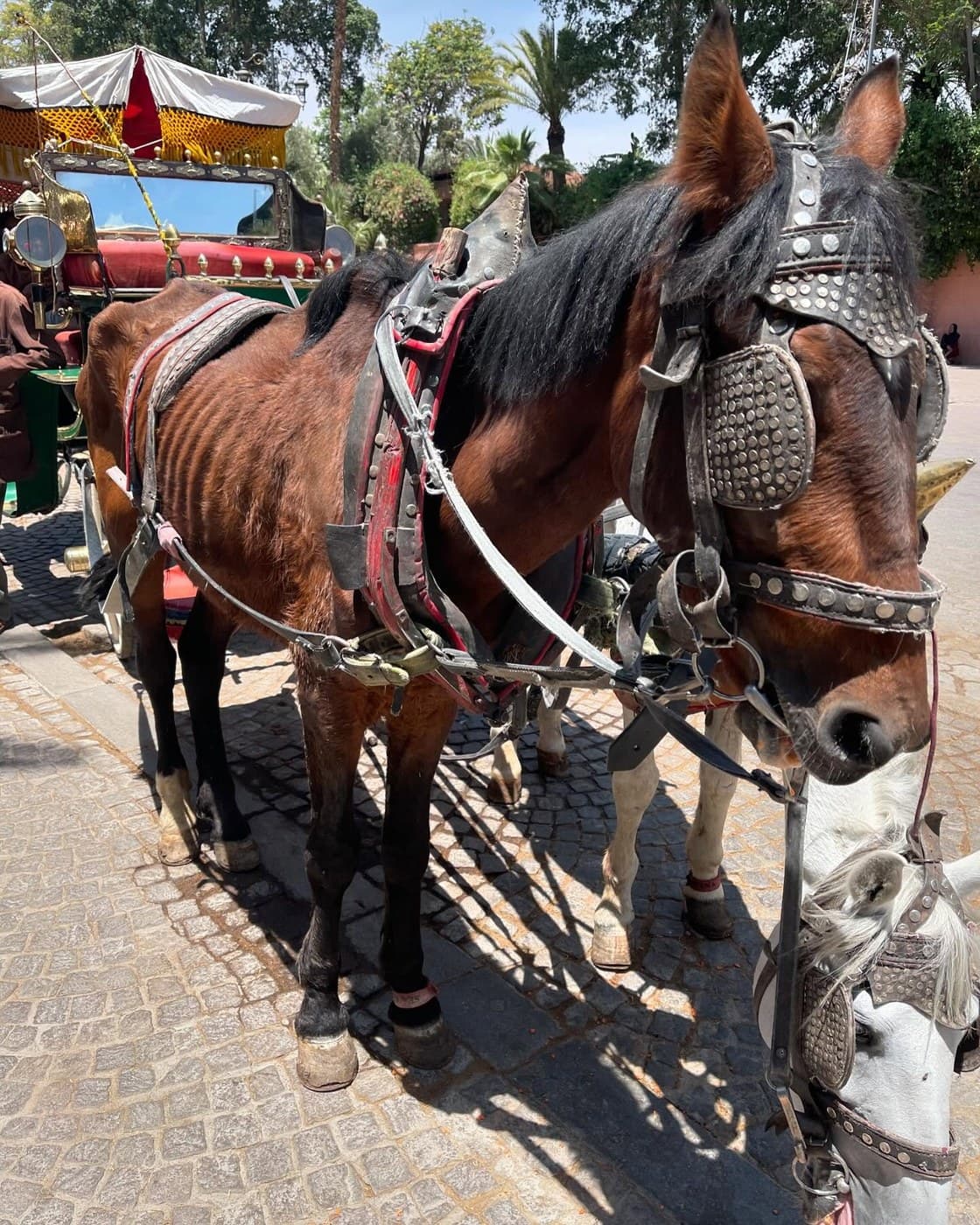
Ayoub drove down for her with a bed of straw already laid in the back of the truck. She still had a rope hobble round her fetlock when he got there. She walked up into it herself. As they pulled away, a white carriage horse stood at the kerb in full harness, waiting for a fare.

She came down the ramp here in the afternoon, in her own time, and drank a bucket of water without stopping. Then Ayoub cleaned and dressed her leg while another of our carers stood at her head and fed her out of a bowl, and she never moved — two strangers working on her, and she stood and let them.

She is thin, and her back carries the pale scars of a lifetime under a harness, healed over long ago and never once noticed. She has worked every day of her life. She will not work again.

Her knee took the worst of the fall and we are told it will come right. Her tongue is badly damaged and will take longer, so she is on soft feed for now, and eating it well. She is already out in the hospital paddock with the others, which is sooner than we expected, and she seems perfectly content in their company.

They have called her Lucky. Given the life she has had, that takes some explaining. But look where she is standing.

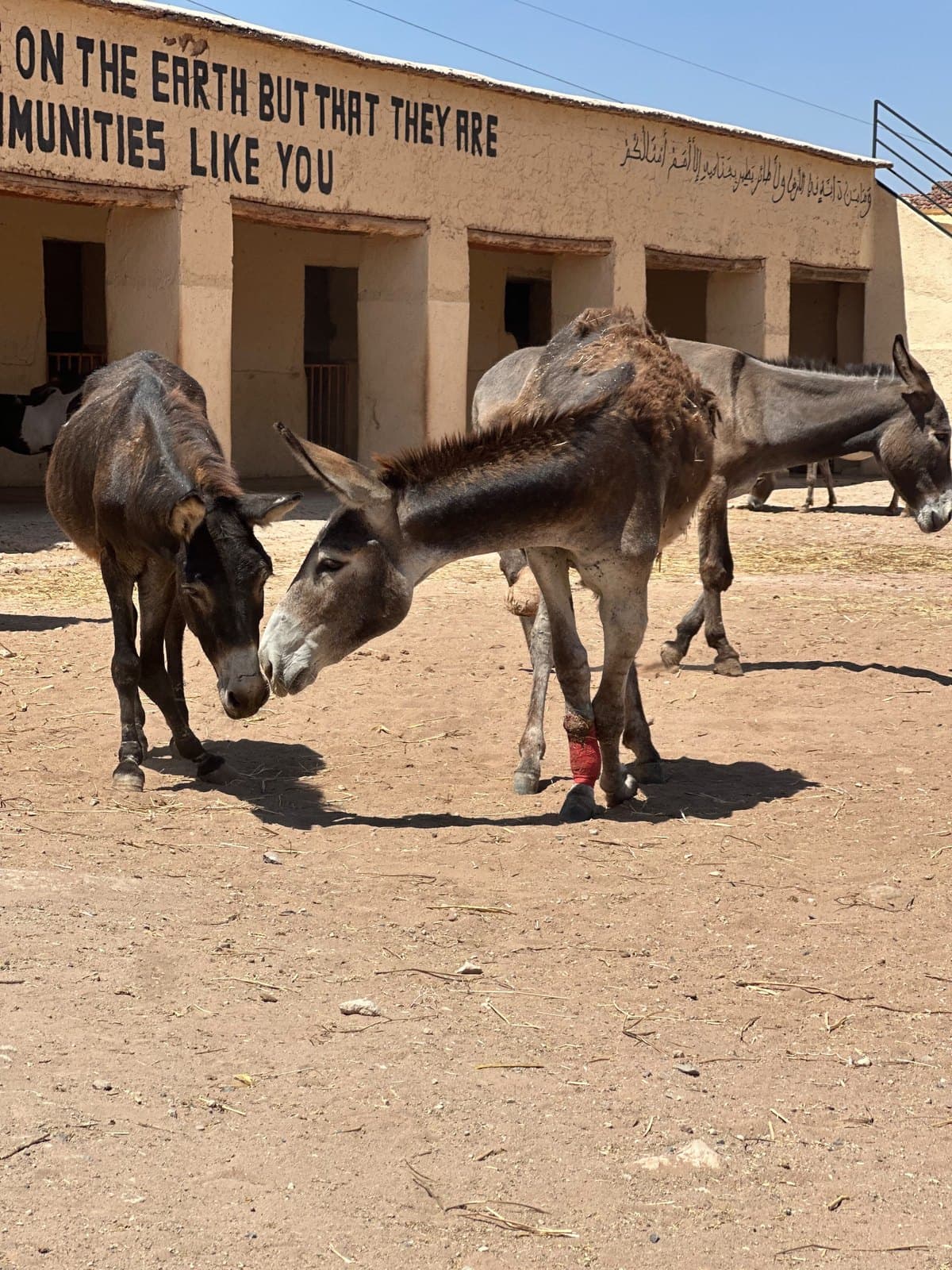
Lucky walking across the hospital paddock at Jarjeer among a group of donkeys, with the stable block behind
In the hospital paddock. The wall behind reads: there is no creature on the earth but that they are communities like you.
Tommy standing at the paddock fence with his ears up, looking straight at the camera, another donkey behind himDonkey

Tommy

Here since 2011 · Our founding donkey

Tommy arrived before there was a Jarjeer for him to arrive at. Our founders, Sue and Charles, had retired to Morocco from the law, and in 2011 another animal charity asked whether they would take on an orphaned donkey who had grown difficult to handle and whom nobody had managed to settle. Within a few years there were twelve. Rather than keep them as pets, Sue founded a refuge, and it opened in 2014.

We asked the head of the veterinary service at Liverpool University what to do with him. The advice was not what anyone expected: find him a very strong female. That was Baida, who knocked him firmly into shape. He was castrated soon afterwards, and the donkey nobody could manage settled quietly into the herd.

For a long while he had a stable to himself. That stable is the teashop kitchen now. More than three hundred animals have been given a home here since, and Tommy has watched every one of them arrive.

He has also been the voice of this place for most of a decade — complaining about the standard of service with a bucket in his mouth, turning up for attention on a morning when nobody asked him to, and once thanking three thousand people personally for following him. A great many people who support Jarjeer first heard about it from a donkey.

He was here before the beginning. Everything since has happened around him.
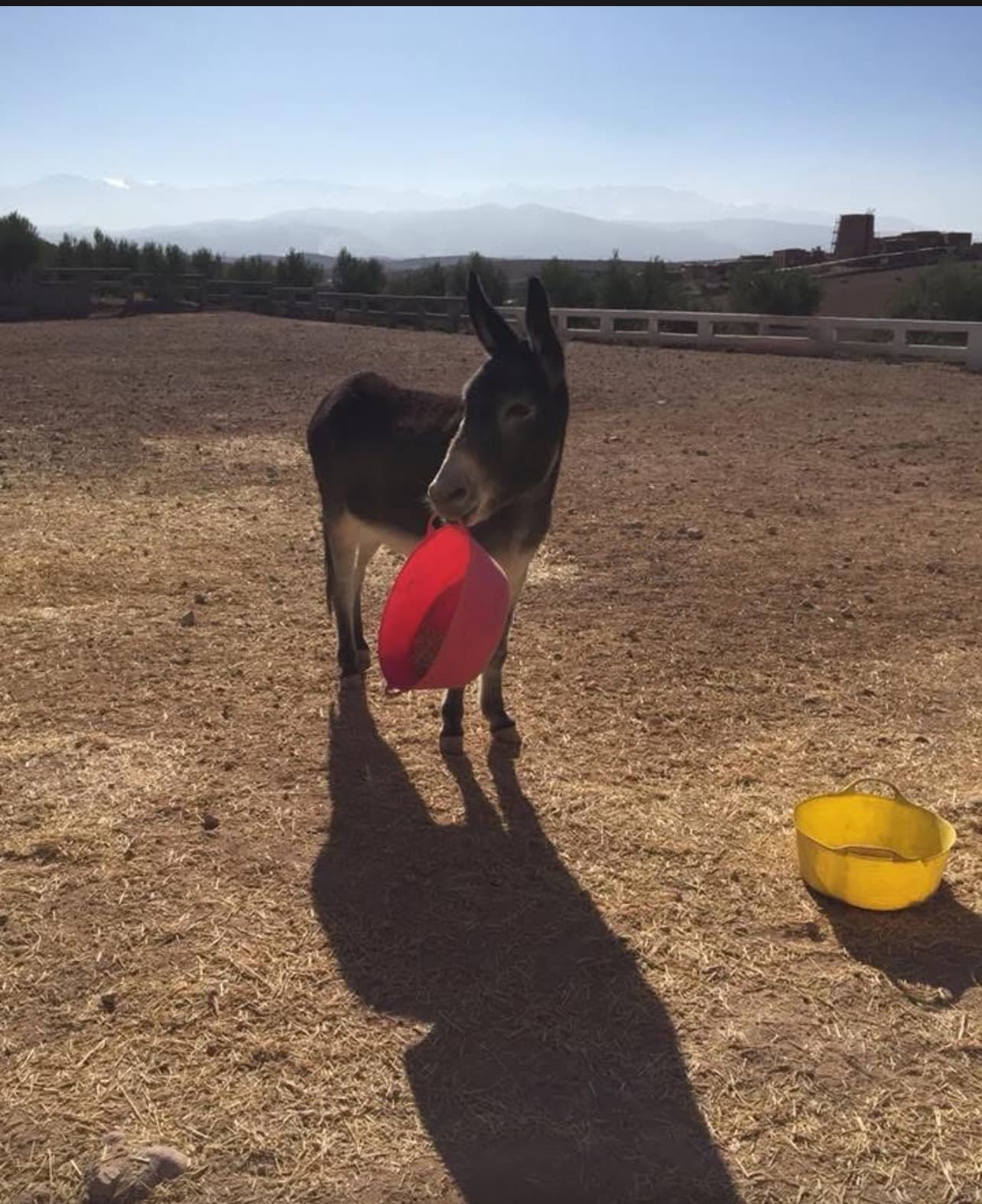
Tommy standing alone in the paddock holding a red feed bucket in his mouth, the Atlas mountains behind him
Tommy says the service just isn’t good enough here.
Tosca, a chestnut mule in a red head collar, led along a path by a keeper at JarjeerMule

Tosca

Once a lead mule in Imlil · Lives up with the horses

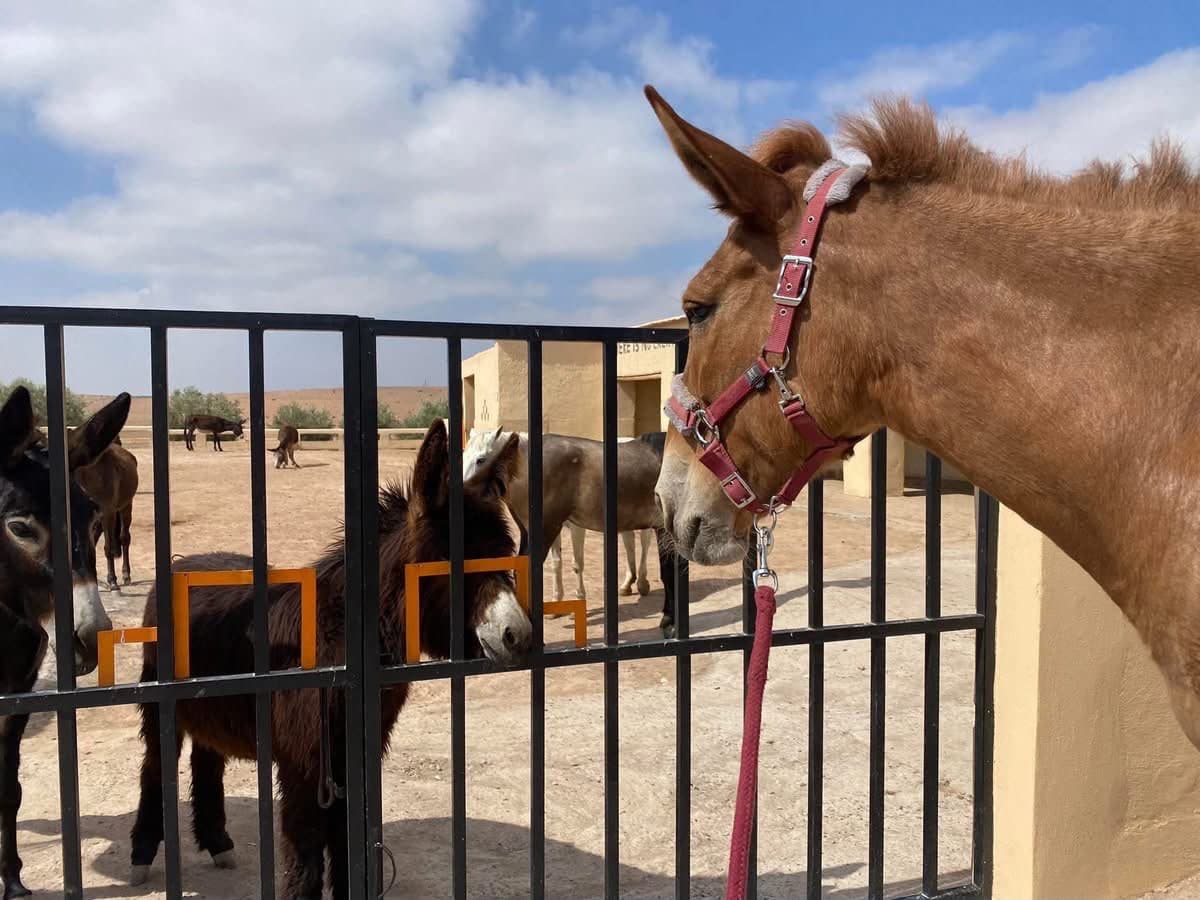
Tosca spent her working life as a lead mule in Imlil, high in the Atlas. She first came to us during the pandemic for medical treatment. She had an excellent owner, was always worked without a bit — just a head collar — and she knew every one of the mountain passes, which is why she was the one who led the other mules.

In 2021 we heard that her owner needed a younger mule, and that to buy one he had been made to give Tosca up in part exchange. We found her in Agadir, pulling a cart and very depressed. After a great deal of negotiation with her new owner, and with the police along the way, we were able to bring her home to Jarjeer.

She lives up with the horses now, though we can let her out whenever she likes. She wanders the whole estate, comes down most days to see the donkeys, and finds her own way back at teatime.

Tosca standing at the gate of the donkey paddock, nose to nose with the donkeys inside
She comes down most days to see the donkeys.
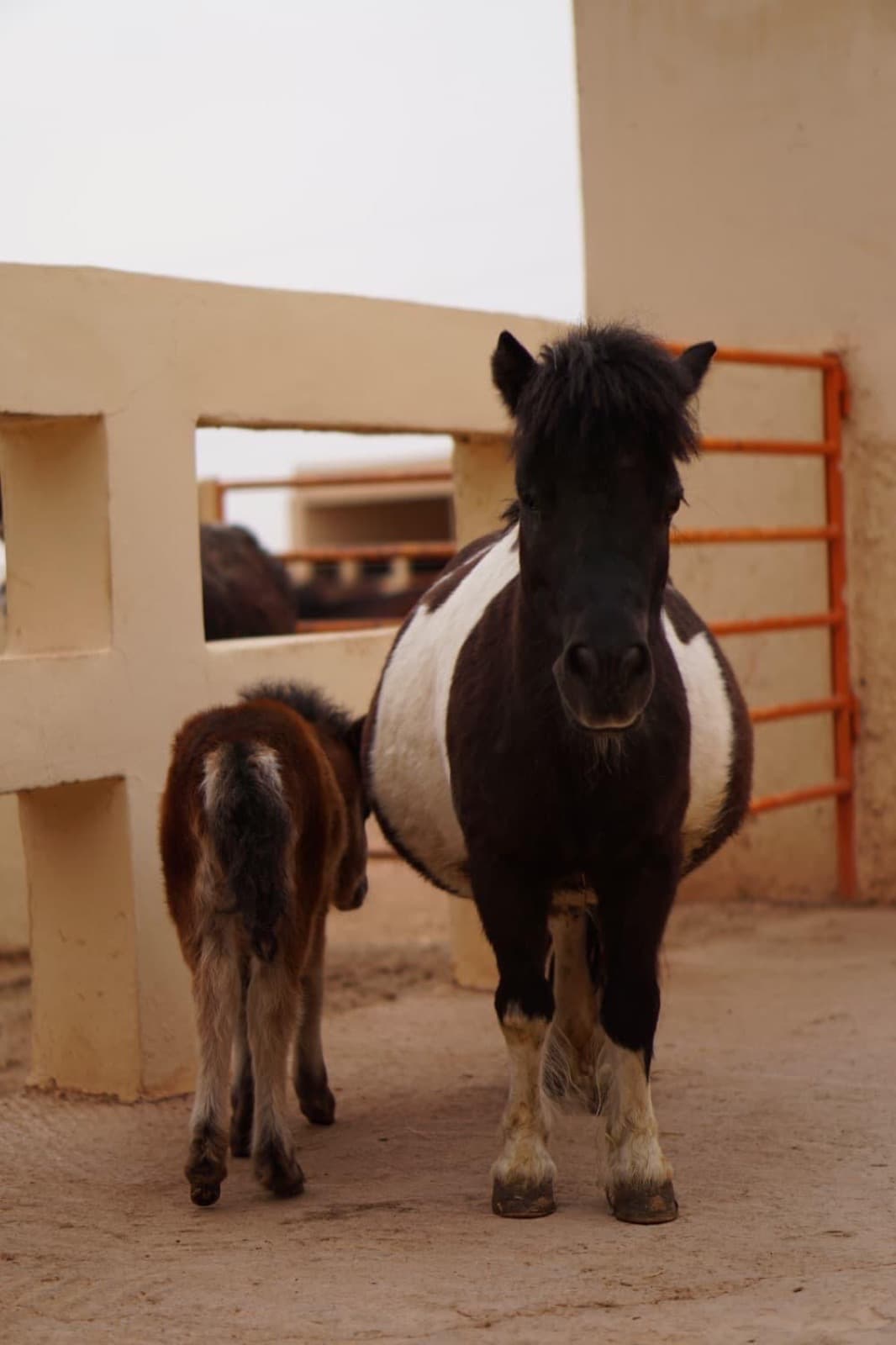
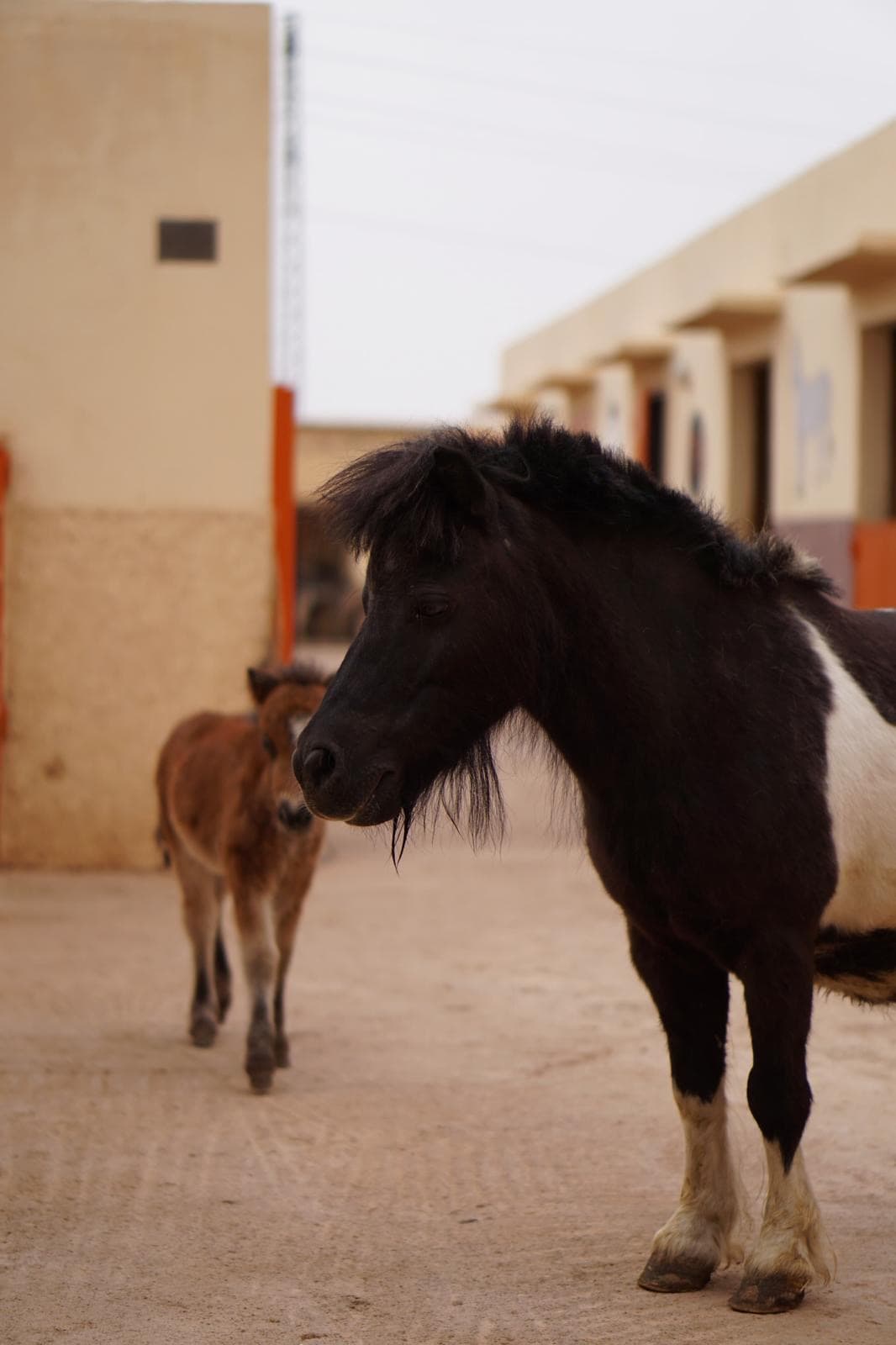
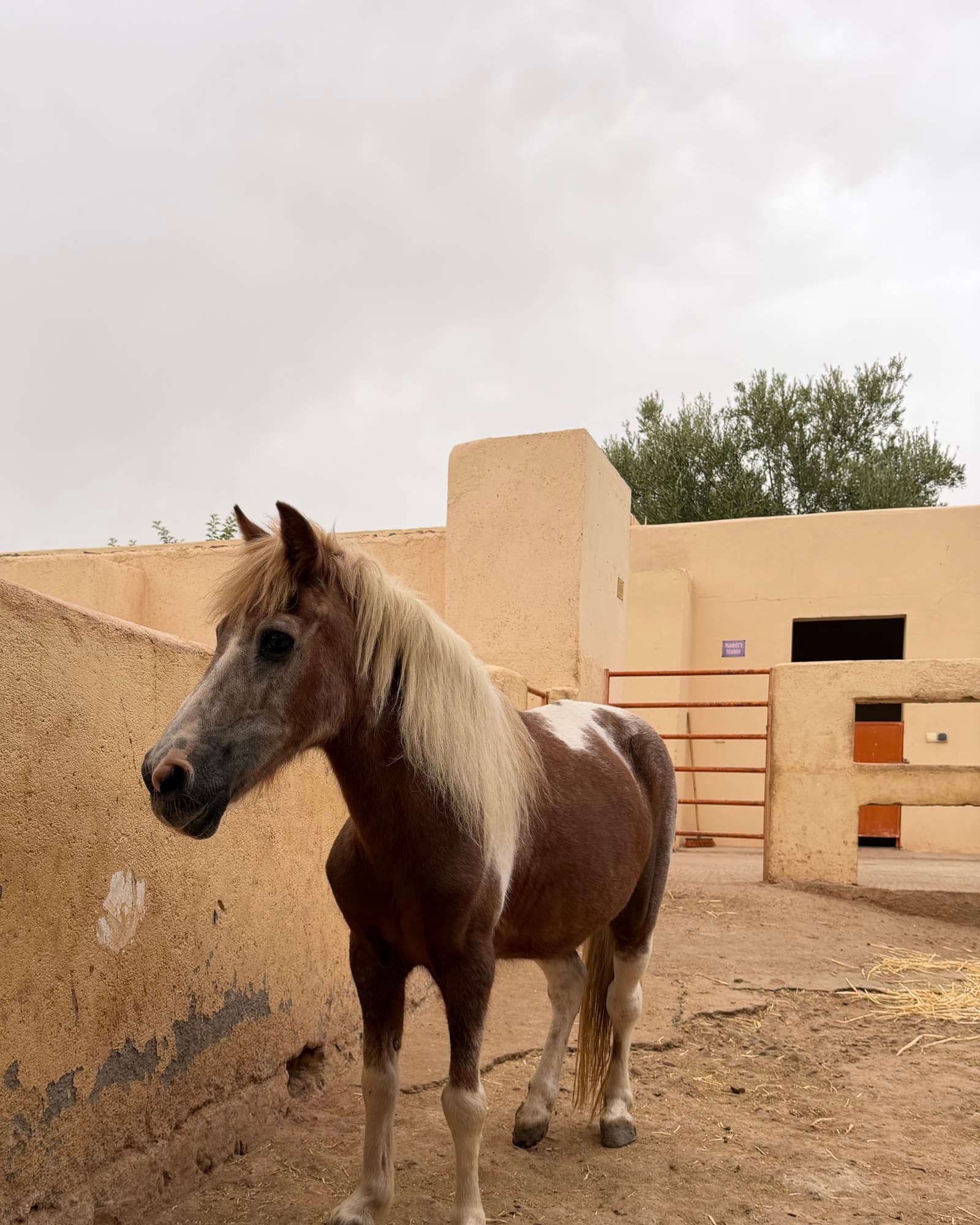
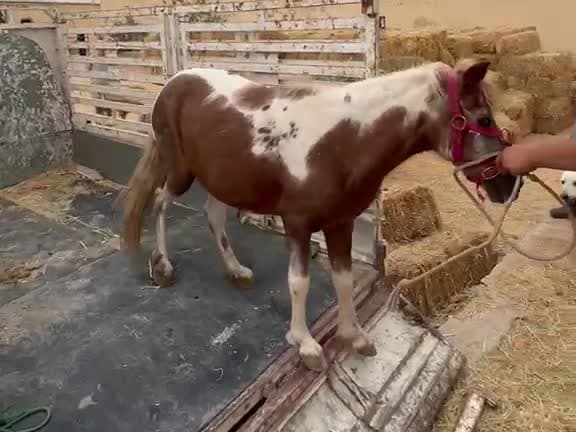
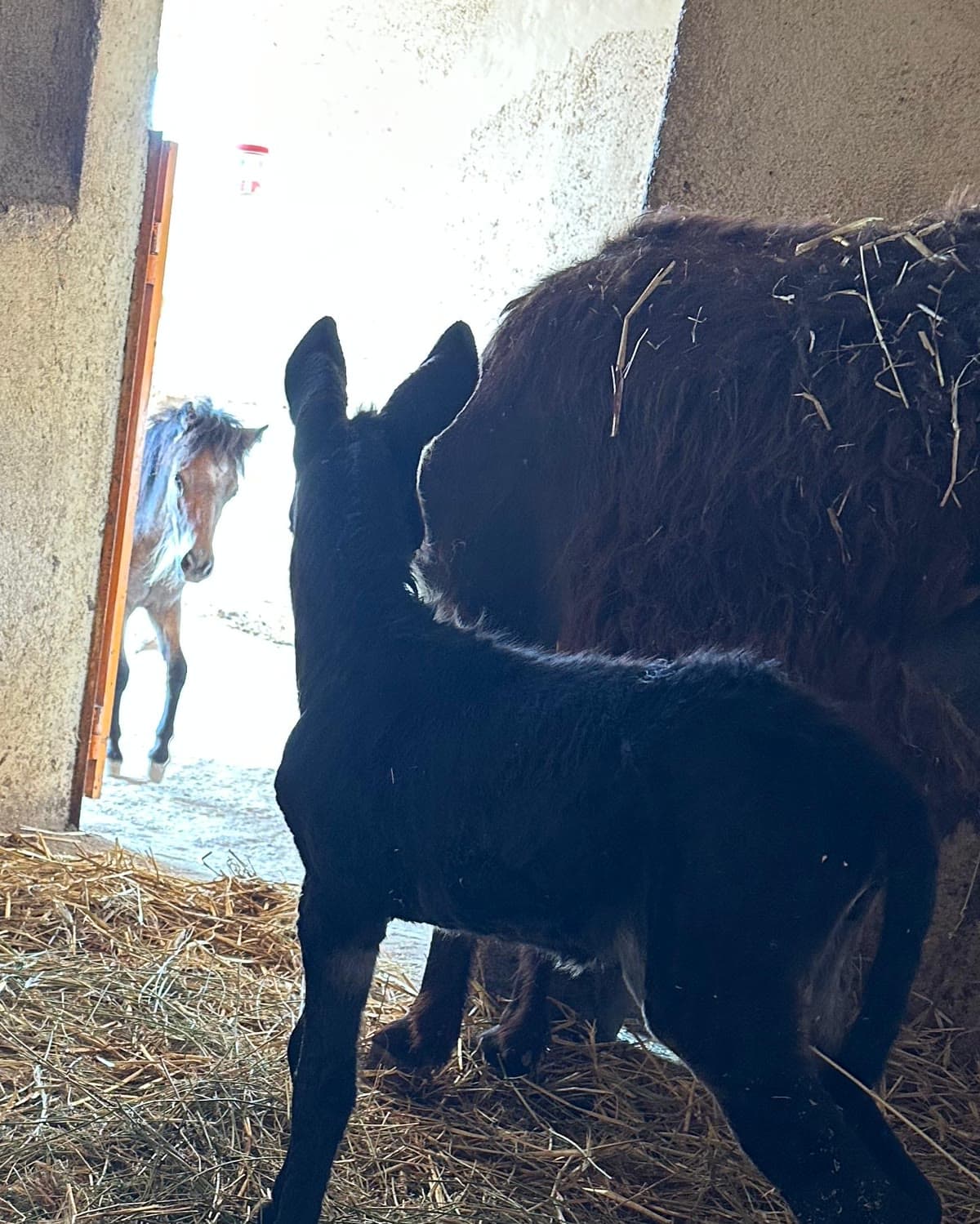
Halima, a black and white piebald pony, standing in the yard at Jarjeer with her newborn foal Marjana beside herPony

Halima

Rescued from Meknes · Marjana’s mother

Halima spent her days in Meknes tied up in the street under an enormous decorated saddle, so that tourists could be photographed beside her, or sit on her back. All day, every day, in the heat, on the cobbles. She was also heavily pregnant, and nobody had thought that worth mentioning.

Somebody filmed her and put it online, and this time the internet did what it very rarely does: it stayed angry long enough to matter. Millions of people watched. We negotiated with her owner, arrangements were made, and he found a driver to bring her the six hours south to us.

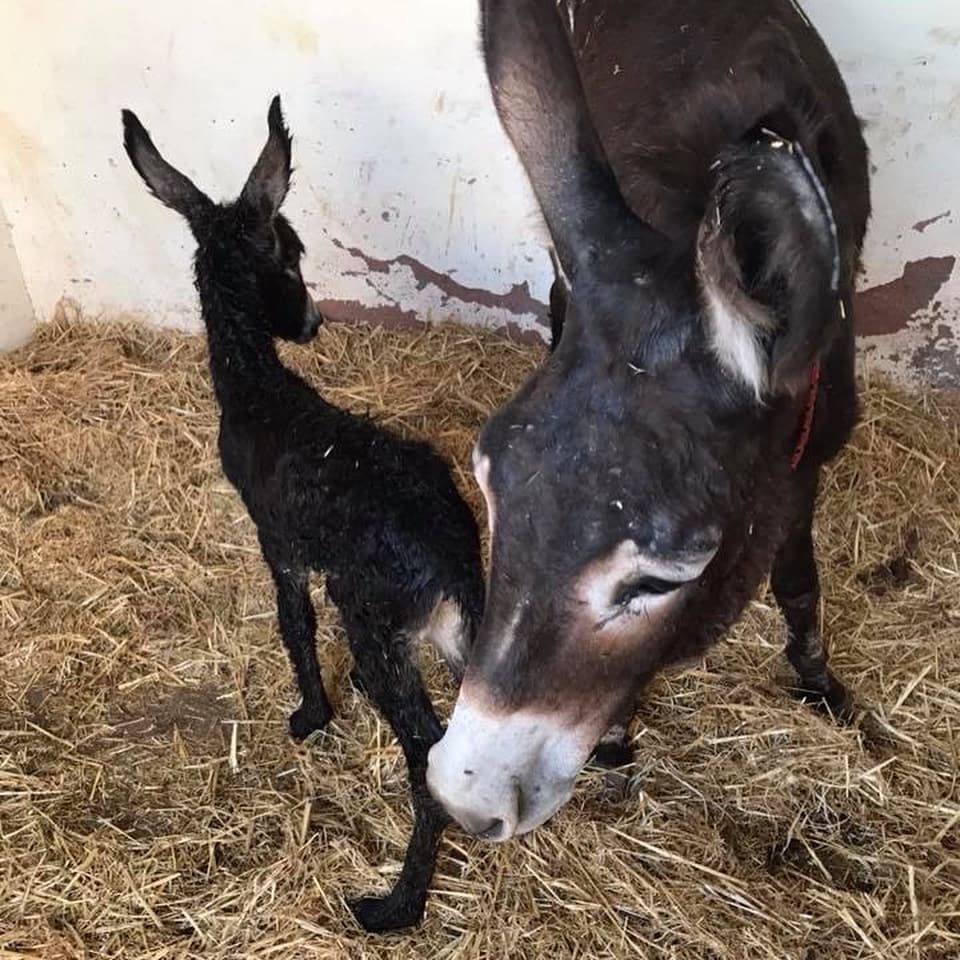
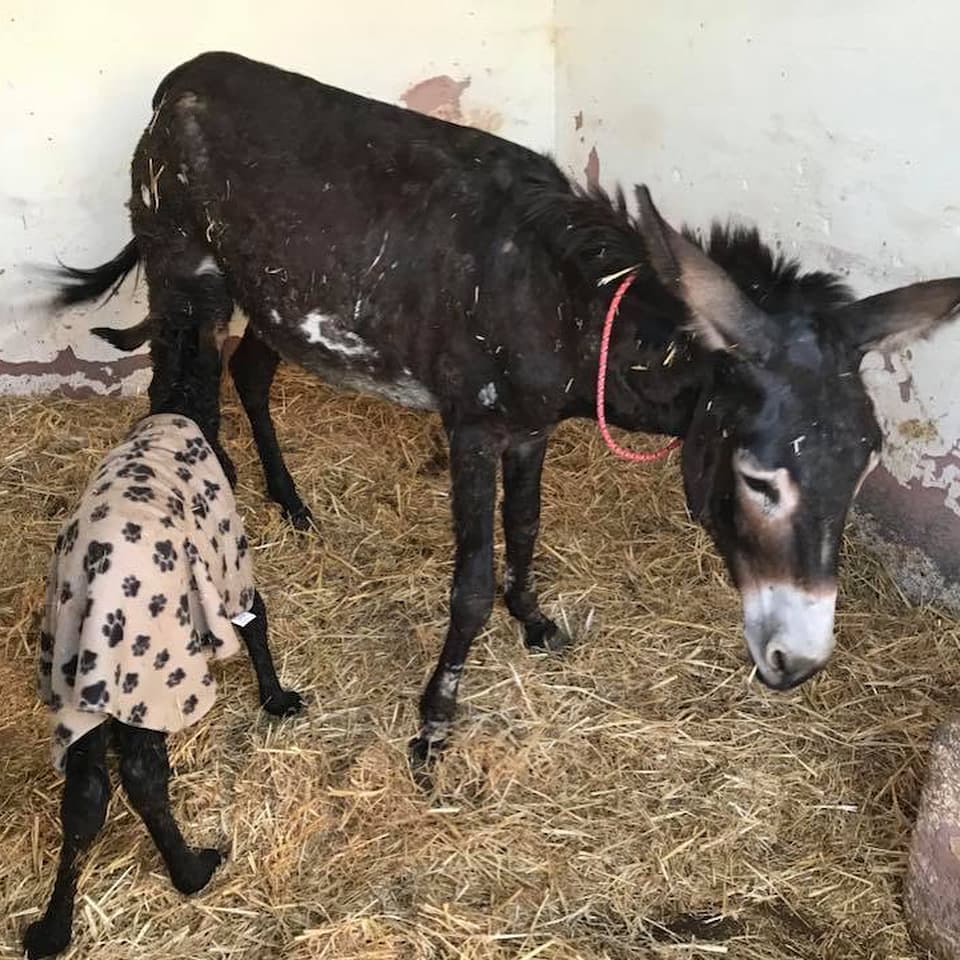
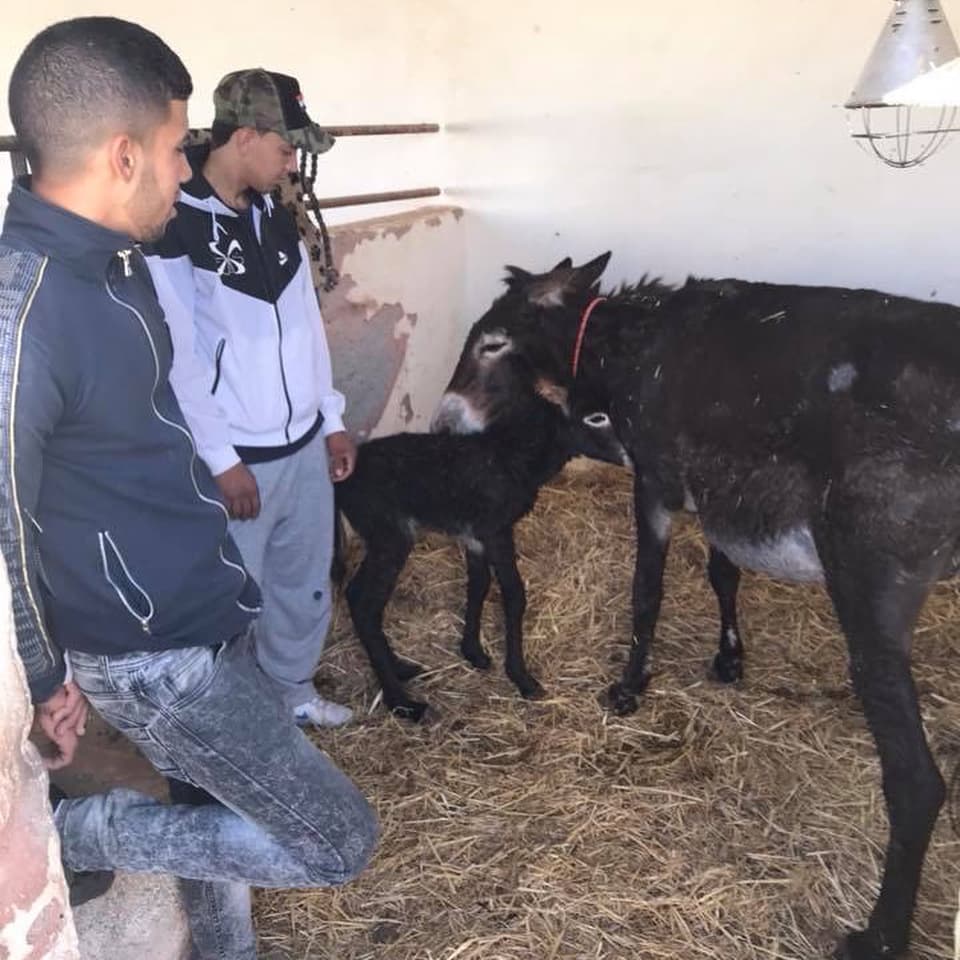
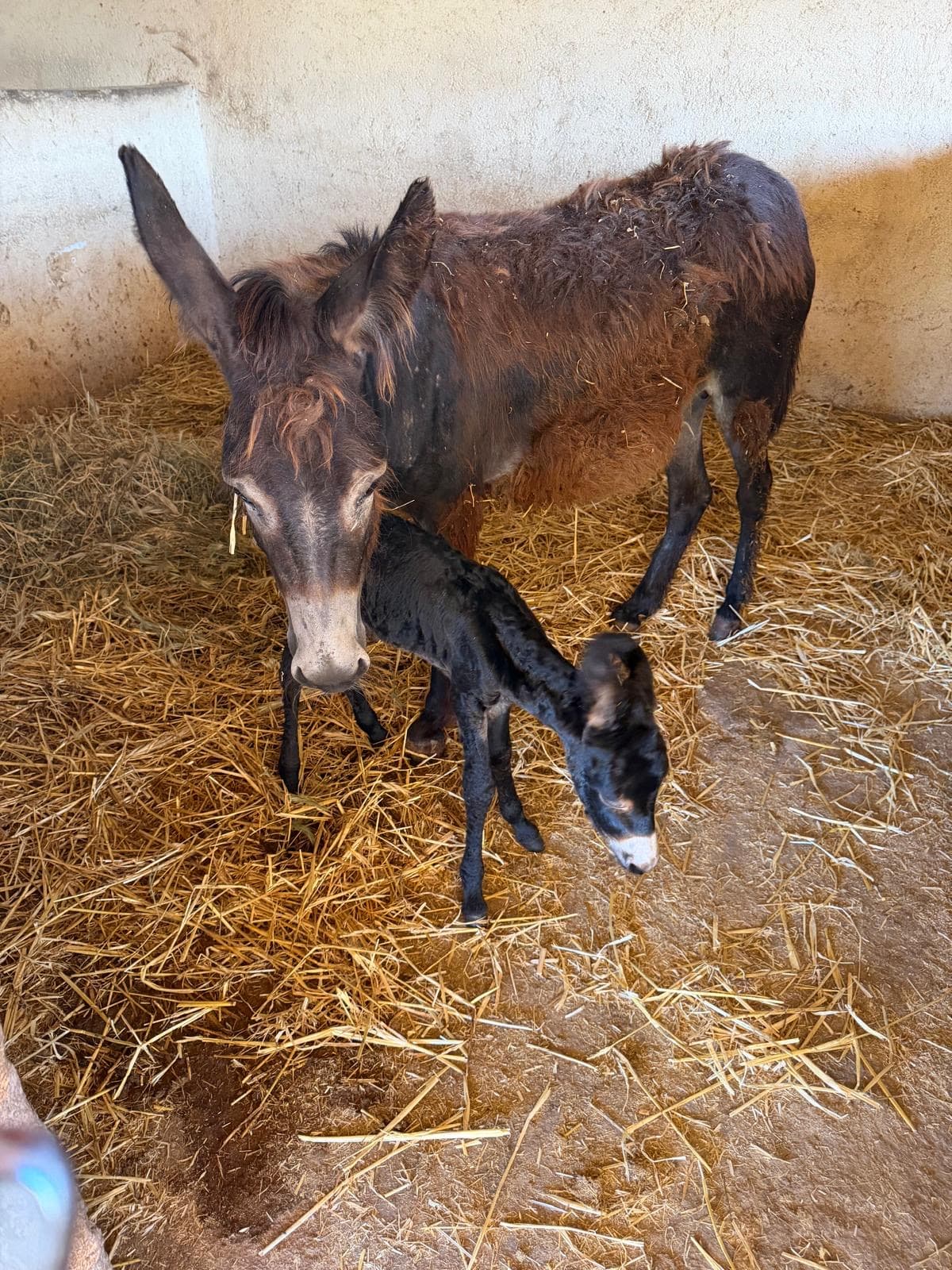
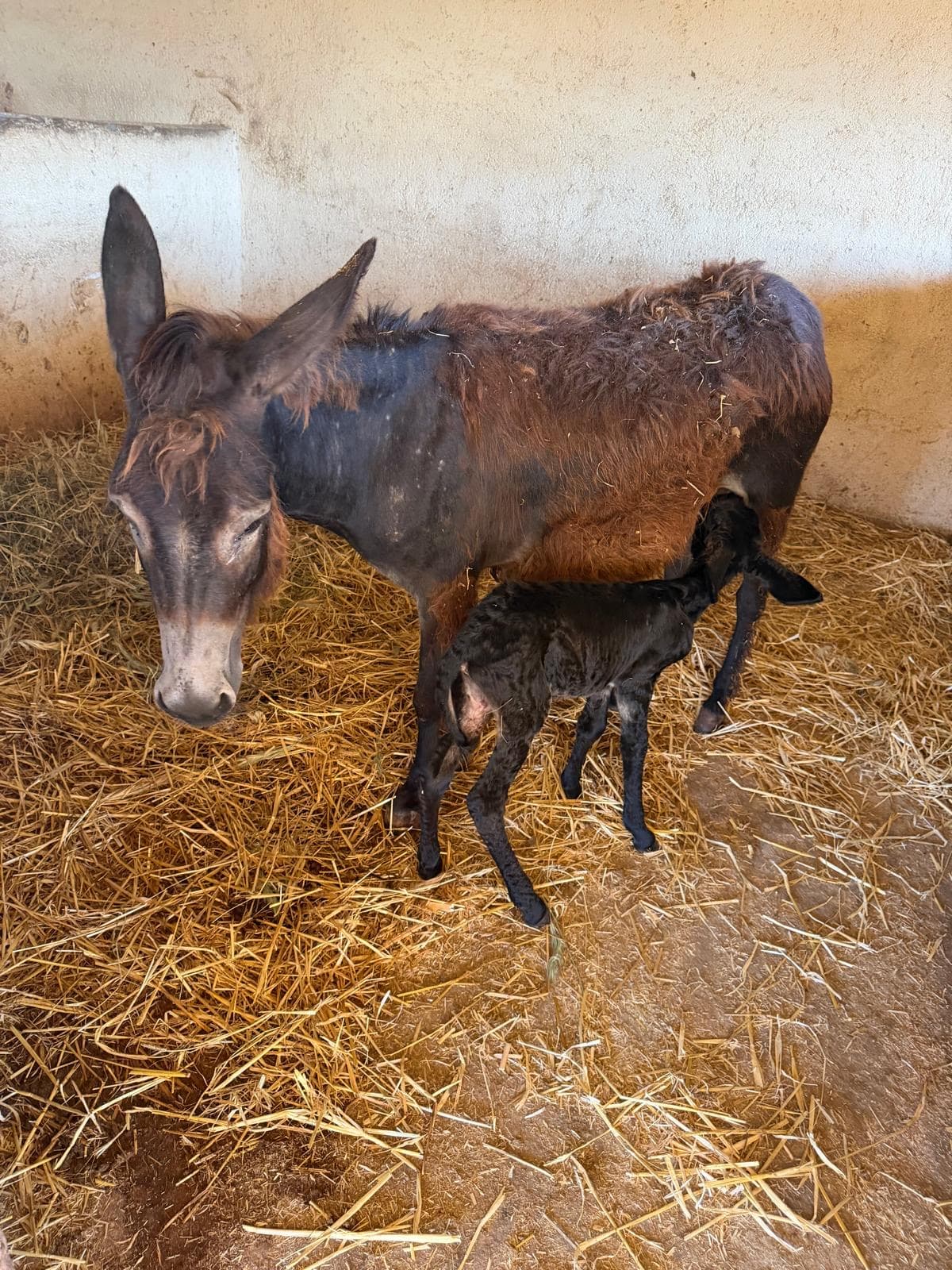
At two o’clock in the morning, somewhere on that road, she started to foal. The driver pulled over onto the verge and telephoned Jarjeer, and Ayoub, who manages the refuge, stayed on the line with him in the dark and talked him through everything that needed doing. An hour later there was a healthy foal standing at the side of the road, halfway between the old life and this one, and the two of them finished the journey together.

They reached us to a stable banked deep in straw. A few days later we walked her out onto the green. She was nervous of it — she had never in her life stood on grass and did not know what her feet were telling her. Then she put her head down, and her baby copied her.

Halima standing in the stable yard with Marjana close behind her
Marjana has rarely been further than this from her since.
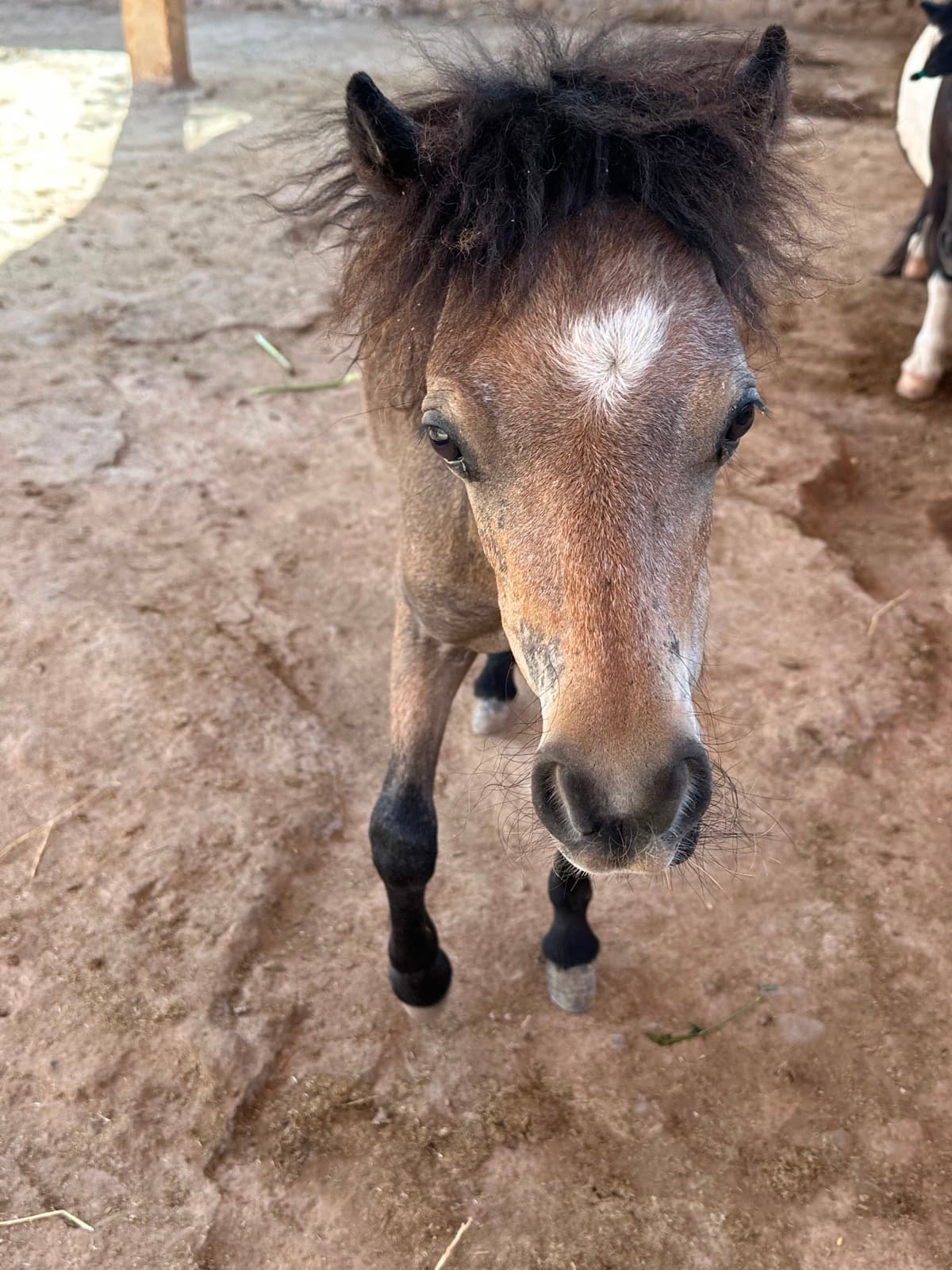
Marjana, a young dun pony with a white diamond on her forehead, standing in the shade of a reed shelterPony

Marjana

Born at the roadside · Named by the driver

Marjana was born on a verge at two o’clock in the morning, somewhere on the six-hour road between Meknes and Marrakech, while a lorry driver knelt beside her mother with a telephone pressed to his ear and Ayoub on the other end of it.

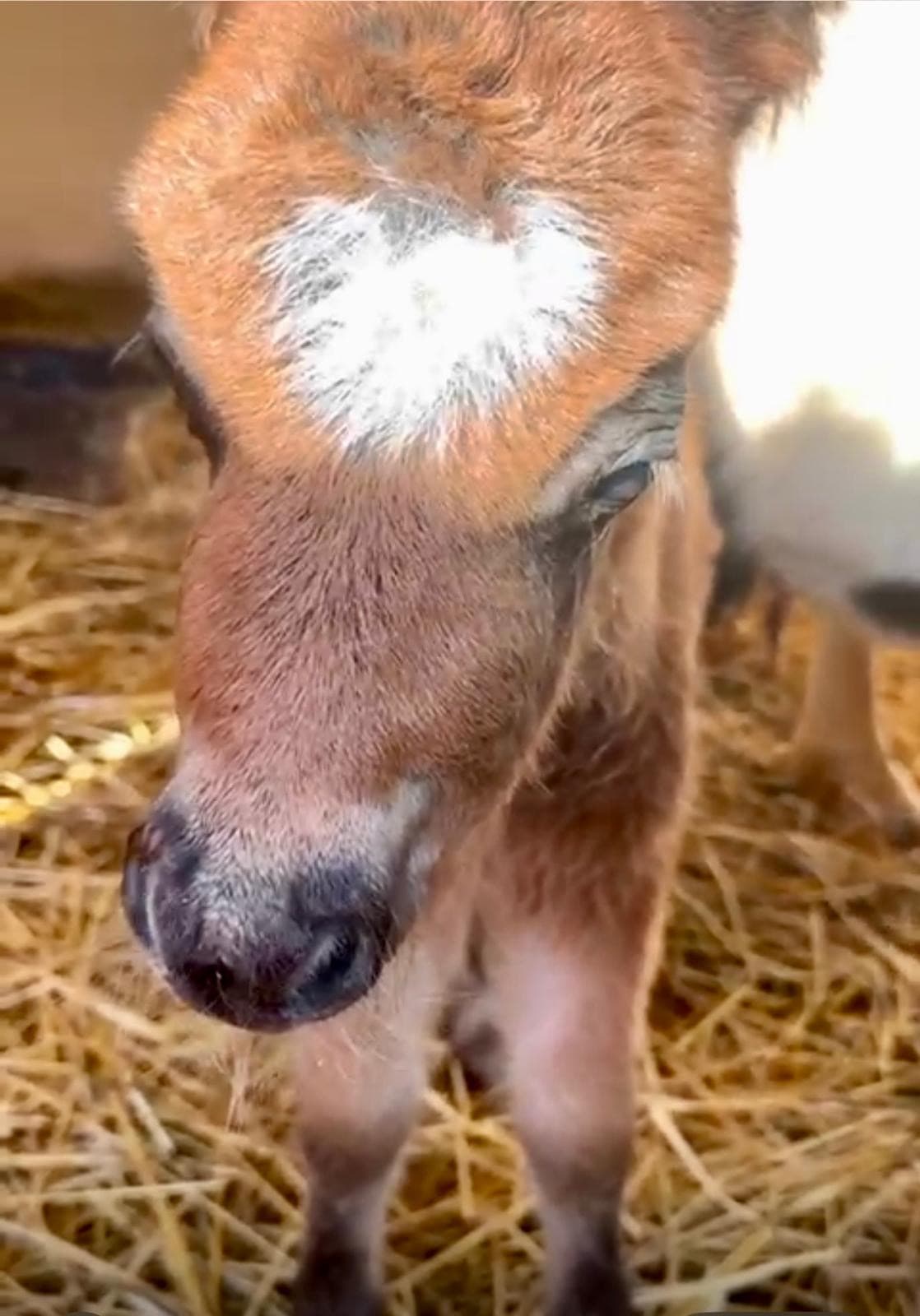
That driver had been hired to move an animal. What he did instead was pull over in the dark, deliver a foal at the side of a road, and then give her a name: Marjana, a jewel, for the white diamond on her forehead. Then he drove them both the rest of the way to us.

She has never been tied up, never worn a saddle, and never stood in a street with a stranger on her back. She has no idea that any of this is unusual, which is exactly as it should be.

She is growing up here alongside her mother, and the mark she was named for is still the first thing anybody notices about her.

Marjana as a newborn foal, standing in deep straw, the white diamond already showing on her forehead
The mark she was named for, hours after she was born.
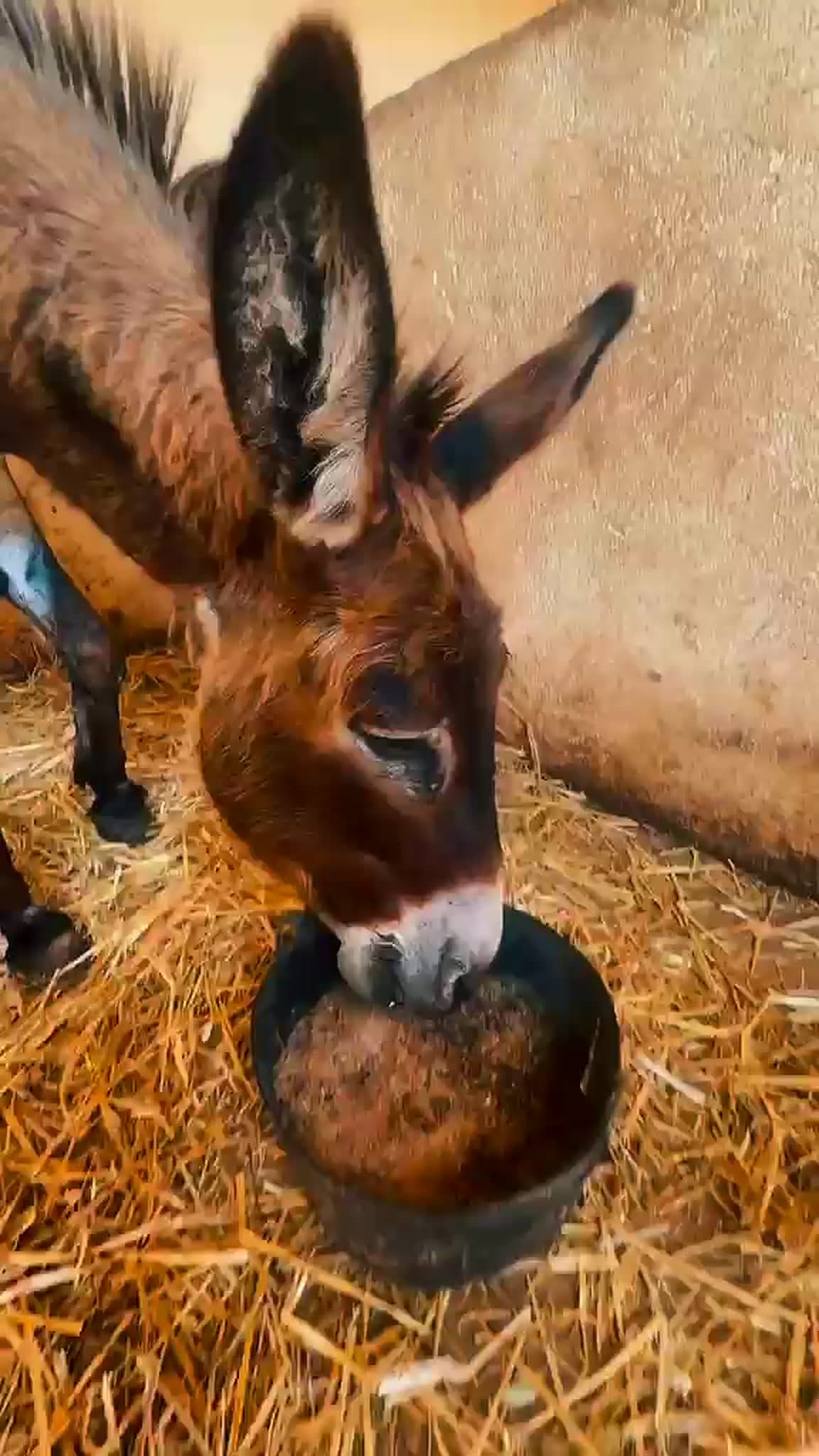
Venus, a brown donkey, standing in deep straw at Jarjeer with her head down in a feed bowlDonkey

Venus

Rescued from Targa · Named by the woman who found her

A young Moroccan woman came out of the veterinary clinic in Targa one morning and found a donkey harnessed to a cart of rubbish at the side of the road. The donkey was thin, there was an open wound where the harness sat, and her owner was lying unconscious on the verge.

She telephoned Sue, and then she stayed on the line. Ayoub was forty minutes away. In those forty minutes Sue talked her through getting the donkey out of the cart, and a group of young people gathered on the pavement, unhitched her, pulled up handfuls of grass to feed her, and stood around her. When her owner came round and went to take her back, they would not let him. Then they called the police.
The policeman let Ayoub load her onto the truck and asked him to wait for officers coming from Marrakech. They thanked us for taking her. Her owner was arrested.

She travelled home on fresh straw. Ayoub, who had driven down for her that morning, cleaned the wound the harness had made — gloved, crouched in the yard, taking as long over it as it needed and no less. Then she went into a stable banked deep in straw, with a rug over her back, and put her head into a bowl of feed and did not take it out again.

The young woman who made that telephone call is the one who named her Venus. She has written to us ever since, and she still sends what she can.

Venus being led in through the gate at Jarjeer on a red lead rope, thin, with her ears up
Walking in through the gate, an hour after the police let her go.

Every one of them is here because someone helped

Feed, veterinary care and a quiet field for the rest of their lives — it is all paid for by people who will never meet them.
Donate to Jarjeer